
Dolphins of Komodo National Park: A Diver's Guide 🐬
There aren’t many better ways to start your day than with a boat ride out to Komodo and seeing dolphins gliding playfully alongside the bow. If you hear our crew shouting “Lumba lumba!!” (Indonesian for dolphin), drop everything and look out to sea!
More than just Dragons and Mantas 🌊
Although Komodo is best known for the Komodo dragons on land and the reef mantas underwater, there are actually 10 different species of dolphin that call Komodo National Park home.
It is not uncommon to see dolphins from the boat either in the distance or dancing in the bow wave; it is, however, a rare treat to see them while diving. Here we will go over 6 of the more commonly seen dolphins in the park so you can identify them on your next trip.
1. Spinner Dolphin
(Stenella longirostris)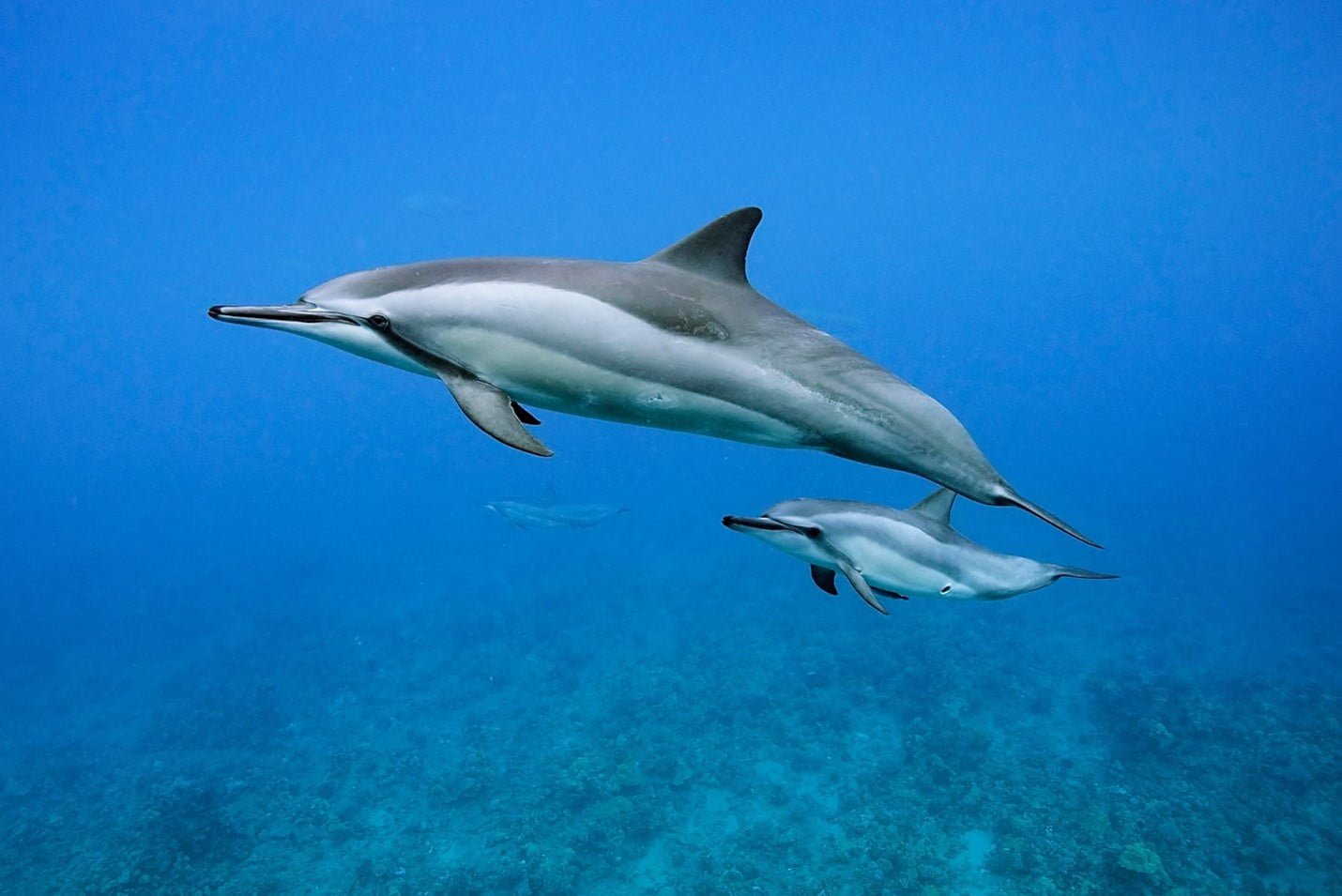
Called "Spinner" due to their tendency to put on acrobatic displays, spinning on their longitudinal axis while leaping out of the water (2 to 5.5 spins per jump!).
Identification: Slender body, long rostrum (beak), and distinct coloration (light grey dorsal side changing sharply into a white/cream underside). They are highly social and found in large groups ranging from a dozen to several hundred.
2. Indo-Pacific Bottlenose Dolphin
(Tursiops aduncus)A year-round resident often seen playing in the bow wake. Generally smaller than the common bottlenose, they have a proportionally larger rostrum and spots on their belly.
Dragon Dive Sighting: Our team has been lucky enough to see them while diving at one of the northern dive sites, Castle Rock. They are highly intelligent and social, typically found in groups of 5 to 15.
3. Risso’s Dolphin
(Grampus griseus)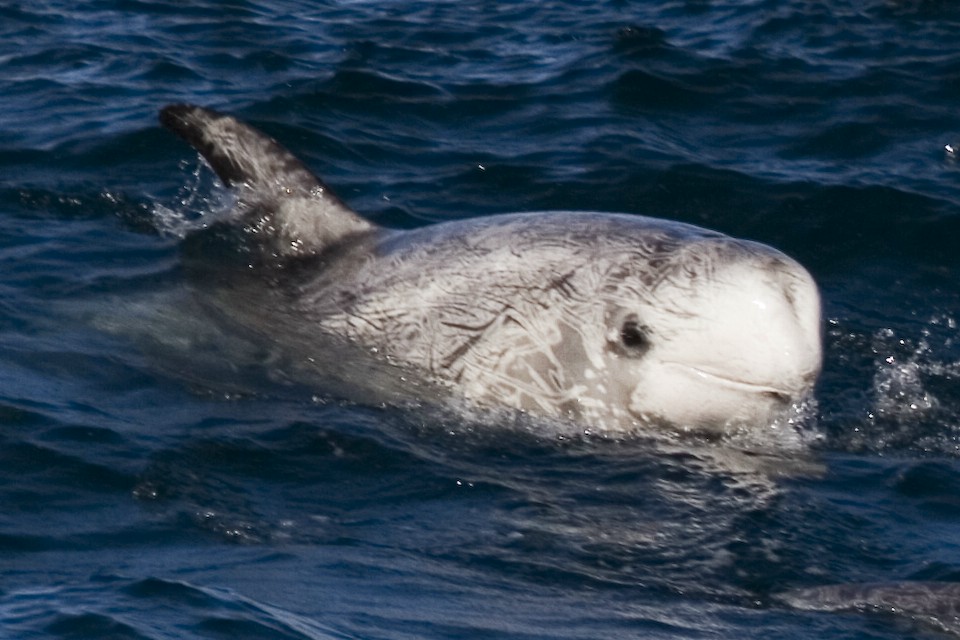
Less frequent visitors with very distinct features: a bulbous head, triangular dorsal fin, and an unusually large amount of scarring on their skin.
Why the scars? Male-on-male competition. The scarring is particularly pronounced due to a lack of pigmentation and is thought to discourage further challenges. They typically travel in groups of 10 to 50.
4. Pantropical Spotted Dolphin
(Stenella attenuata)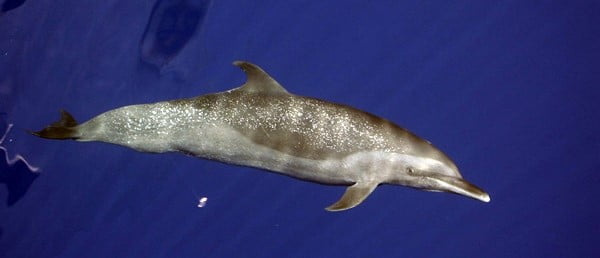
A medium-sized dolphin with a slender body and a distinct spotted pattern that appears upon maturity. They are highly active and known for making big splashes.
Tuna Association: They are often found swimming with Yellowfin Tuna. Although they don't feed on them, this association unfortunately leads to them being frequently caught as bycatch in fisheries.
5. Fraser's Dolphin
(Lagenodelphis hosei)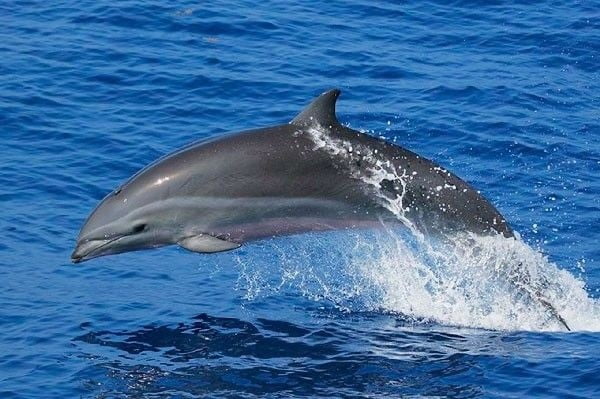
Typically found in deep tropical waters, these are relatively rare in Komodo. They have a stocky body and small rostrum.
Identification: Look for a dark stripe extending from the eye to the pectoral flipper. They are highly social (groups of 10-1,000!) and often mix with False Killer Whales and Melon-headed Whales.
6. Indo-Pacific Humpback Dolphin
(Sousa chinensis)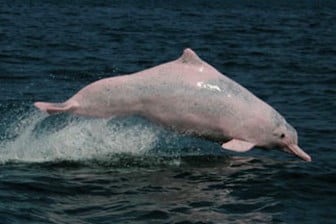
Sometimes referred to as the Chinese Dolphin. They live in small groups (less than 10).
Why are they Pink? They can be grey, white, or pink! The pink color is not albinism, but rather blood vessels overdeveloped for thermoregulation.
💡 Dolphin Fun Fact: How do they sleep?
Dolphins cannot shut down their brains to sleep like humans, or they would drown. They use a process called Unihemispheric Sleep.
They shut down one hemisphere of their brain at a time. When the left eye is closed, the right side of their brain is shut down, and vice versa. This way, they never completely lose consciousness and can continue to surface for air!
Be an Ocean Ambassador 🌏
Indonesian seas are home to a wide range of cetaceans due to deep-water channels and nutrient-rich upwellings. As divers, we have the privilege to observe these animals in the wild.
At Dragon Dive Komodo, we view our guests as ambassadors. We encourage you to spread the word on marine conservation, not just in Komodo, but around the world.
Join Us & Dive Komodo