Updated October 2026 · Written by the Dragon Dive Komodo team and resident PADI Course Director William Baillet in Labuan Bajo
Flores Travel Guide18 Top SpotsLocal Experts
What to Do in Flores, Indonesia? Top 18 Places (Local's Guide)
Flores is one of Indonesia's most underrated islands — wild, raw, and far quieter than Bali. We have been running our dive resort in Labuan Bajo since 2016, and we wrote this guide to share the places that genuinely matter. From Komodo dragons to Kelimutu's tri-colored crater lakes, from traditional Wae Rebo villages to world-class diving in Komodo National Park — here's everything worth your time on Flores.
If diving is your priority: you'll spend most of your time around Labuan Bajo (West Flores). If you want the full island — culture, volcanoes, traditional villages — plan 10 to 14 days, because road travel between regions is long.
Padar Island, Komodo National Park
Flores at a Glance — The 4 Reasons to Come
Komodo National Park
The only place on Earth to see Komodo dragons in the wild. World-class diving with mantas, sharks and drift dives. Padar viewpoint, Pink Beach, Rinca Island.
Volcanoes and Nature
Kelimutu's three crater lakes, each a different color. Mount Inerie sunrise trek. Hot springs at Sano Nggoang. Bajawa's volcanic landscapes.
Culture and Villages
Wae Rebo traditional Manggarai village (UNESCO Asia-Pacific Heritage Award). Bena and Luba Ngada villages with megalithic stones. Caci dance ceremonies.
Beaches and Islands
Pink Beach, one of the world's few pink-sand beaches. Kanawa Island. Koka Beach. The 17 Islands Marine Park near Riung. Countless uninhabited islets.
1. Komodo National Park — Dragons, Pink Beach and Padar
Komodo National Park is the reason most travelers come to Flores in the first place — and rightly so. It's a UNESCO World Heritage Site covering Komodo Island, Rinca Island, Padar Island and 26 smaller islets.
If you are wondering how to get to Komodo Island, the easiest way is a boat trip from Labuan Bajo. The park hosts the last wild population of dragons, so if you are asking where Komodo dragons live, the answer is mainly Komodo and Rinca islands.
Most visitors do a 1-day or 3D2N tour combining: a dragon trek (we recommend Rinca — more dragons per square km, less crowded), the Padar Island viewpoint (the iconic three-bay panorama), Pink Beach (one of the world's few pink-sand beaches), and snorkeling at Taka Makassar or Manta Point.
UNESCO HeritageWild DragonsPadar ViewpointGuide Required
Practical info you actually need
Park fees: independent visitors pay the Komodo National Park fees locally. On Dragon Dive Komodo daily dive trips and recreational PADI courses, park fees are included. Rates change, so check our Komodo entry fees guide before you go.
Visitor quota: since 1 April 2026, the park applies a quota of 1,000 visitors per day, booked through SiOra.
Best time: the dry season (April to November) for the clearest Padar views and the calmest trekking. Manta season runs from November to June depending on the area; no encounter is ever guaranteed.
How to get there: fly to Komodo Airport (LBJ) in Labuan Bajo, then go by boat.
Guide: mandatory for dragon treks. Diving requires a licensed PADI dive center.
2. Kelimutu Volcano — Three Crater Lakes That Change Color
Kelimutu is the geological showstopper of Flores. A volcano of about 1,640 m in central Flores with three crater lakes side by side, each a different color — and the colors change unpredictably over the years as dissolved minerals react with volcanic gases. Turquoise, green, dark blue, black, red and brown have all been recorded, so you never know exactly which palette you'll get.
The walk is short (around 30 minutes from the car park), but you need to leave around 4am to catch sunrise — that's when the light hits the lakes and the colors pop. Clouds often roll in after sunrise, so timing is everything.
Local logistics
Base town: Moni village, the gateway to Kelimutu. Stay overnight there and leave before dawn.
From Labuan Bajo: a long cross-island drive (plan at least two days with overnight stops), or a domestic flight to Ende (ENE) or Maumere (MOF). Routes and connections change, so check current schedules.
Best months: May to October for the clearest skies. December to March is often clouded over.
Entry fee: a national park ticket is required; rates change, so check locally.
Photographer tip: arrive 30 minutes before sunrise to set up. Bring a tripod and a warm layer.
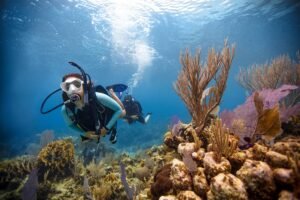
This is our home turf. We have been diving Komodo daily since 2016, and we'll tell you straight: it's one of the best dive destinations on the planet. Strong currents bring nutrient-rich water that supports an extraordinary biomass — mantas at Manta Point (Karang Makassar) and Manta Alley, white-tip and grey reef sharks at Castle Rock and Crystal Rock, the legendary Shotgun drift at The Cauldron, and macro paradise at Wainilu.
That's why Komodo diving is on the bucket list of every serious diver. Beginners can dive here too: sites like Siaba Besar and parts of Tatawa Besar are calm and suitable for new divers. If you need to upgrade your setup before your trip, read our guide on the best gear for scuba diving.
You're set for most Komodo sites. Book our daily dive trips (full-day boat trips with park fees included), or take the PADI Advanced to unlock the deeper sites.
4. Cancar Spider Web Rice Fields — Manggarai Land Tradition
About 17 km west of Ruteng in western Flores, Cancar is the most photogenic example of the lingko system — a traditional Manggarai land-division pattern where rice paddies are arranged in radial spider-web shapes. Each "slice" of the web belongs to a specific family, and its size historically reflected the family's standing in the village.
The viewpoint is on a small hill; locals ask a small entrance fee, which supports the community. The best photos come during planting season (October to November), when the fields are flooded and reflective, or near harvest (March to April), when they turn golden.
Combine your visit with Liang Bua cave (the Hobbit Cave — see #12): both are easy half-day trips from Ruteng. In town, try traditional kompiang bread and Manggarai coffee.
5. Kanawa Island — Snorkeling Off the Beach
Kanawa is a small island about 15 km from Labuan Bajo, around 1 to 1.5 hours by traditional boat. Its standout feature: a fringing reef just a few meters off the white-sand beach, so you can walk in from shore and be on the reef within seconds. Expect schools of fusiliers, blue-spotted stingrays, the occasional turtle and decent hard coral cover.
There's a simple beachfront eco-resort on the island for overnight stays. Most travelers visit on a day trip from Labuan Bajo, combining Kanawa with Bidadari and Sebayur; day-tour prices vary by operator and usually include transfers and lunch.
Honest take: if you're already booked on daily dive trips with us, you'll see equivalent or better reef from the dive boat. Kanawa is best for non-divers, families, or as a low-effort beach day before or after diving.
6. Blue Stone Beach (Penggajawa) — Volcanic Pebbles, No Sand
Located on the south coast of central Flores, a short drive west of Ende, Penggajawa Beach isn't a sand beach — it's a striking shoreline of smooth blue-green volcanic pebbles. The pebbles are also collected and sold for landscaping, which raises real concerns about long-term depletion.
It's more a photo stop than a swimming beach. Combine it with a Kelimutu trip via Ende. The best light is late afternoon, when the pebbles catch the warm tones.
7. Bidadari Island — The Closest Beach Day from Labuan Bajo
Bidadari Island sits about 30 minutes by boat from Labuan Bajo harbour, making it the easiest island getaway in the region. The reef offshore offers respectable snorkeling — colorful reef fish, the occasional reef shark and good coral coverage. Overnight options on the island are limited to a high-end resort, so most visitors come on a day trip.
It's the go-to choice for mixed-interest groups: divers head out further for the serious sites while non-divers enjoy beach time here, then everyone meets back in Labuan Bajo by evening. Combine Bidadari with Kanawa (#5) and Seraya (#13) on the classic "three islands" day tour.
8. Caci Dance — Manggarai Whip Ceremony
The Caci is a ceremonial whip-and-shield duel performed by Manggarai men in western Flores. Two participants take turns striking with a rattan whip while the opponent deflects with a buffalo-hide shield, all to the rhythm of gongs and drums. It's competitive but ritualistic — about honor, courage and respect for the ancestors rather than actual combat.
Catching a real Caci is harder than you'd think. It's performed at weddings, harvest thanksgiving ceremonies and other community celebrations — not on a tourist schedule. Your best chance: ask your homestay or guide in Ruteng or Labuan Bajo about upcoming events. Don't expect Bali-style daily performances. When you find one, it's the real thing — respect the spiritual context and ask before photographing up close.
9. Wae Rebo Trek — UNESCO Award-Winning Manggarai Village
Wae Rebo is a traditional Manggarai village perched at about 1,100 m in the mountains of western Flores, often wrapped in mist. The village consists of seven Mbaru Niang — conical houses built entirely from local materials using ancestral techniques passed down over generations. It received the UNESCO Asia-Pacific Award for Cultural Heritage Conservation in 2012.
Getting there is part of the experience: a drive of around 3 hours from Ruteng to Denge village, then an uphill hike through lush jungle and past streams that takes 2 to 4 hours depending on the trailhead and your pace. Stay overnight in one of the Mbaru Niang — sleeping on woven mats in a shared house, eating communal meals, and waking up to mist rolling over the conical roofs.
Practical
Overnight stay: a per-person fee covers dinner, breakfast and a community contribution; bring cash.
Best season: April to October (dry, cooler hike).
What to bring: sturdy shoes, a warm layer (it gets cold at night), a headlamp, and cash (no ATMs).
Booking: arranged in Denge village on arrival, or through a guide from Ruteng.
10. Sano Nggoang Lake — A Wild Volcanic Crater Lake
Sano Nggoang is a large volcanic crater lake in West Manggarai, south-east of Labuan Bajo, reached by 2 to 3 hours of often-rough road. It's often described as the deepest lake in Flores and is surrounded by hot sulfur springs that locals consider medicinal. The setting is wild — dense forest, no resorts, the occasional water buffalo grazing the shoreline, and birdsong overhead.
Things to do: hike around the rim, soak in the hot springs, go birdwatching (the surrounding forest is known for Flores endemic species), or stay in a homestay in Wae Sano village for cultural immersion. Best for travelers who want to escape Labuan Bajo's growing tourism and see a side of Flores most visitors miss.
11. 17 Islands Marine Park (Riung) — A Quieter Marine Park
On the north coast of central Flores near the town of Riung, this lesser-known marine park covers a cluster of mostly uninhabited islands with reefs, white-sand beaches, and a resident colony of flying foxes on Pulau Ontoloe. The reefs are accessible to snorkelers, but coral diversity and pelagic life don't compete with Komodo — it's quieter and smaller-scale.
Half-day and full-day boat tours leave from Riung harbour; small-group boats are usually shared between travelers to split the cost. It's easy to add to a Flores road trip between Bajawa and Ende, and better suited to travelers doing the full cross-island route than to those based only in Labuan Bajo.
12. Hobbit Cave (Liang Bua) — Where Homo Floresiensis Was Found
Liang Bua is the archaeological site where, in 2003, researchers discovered the remains of Homo floresiensis — a previously unknown species of hominin, just over 1 meter tall, who lived on Flores until roughly 50,000 years ago. The discovery rewrote what we thought we knew about human evolution and earned the species the nickname "the hobbits".
The cave is about 14 km from Ruteng (around 30 minutes by car). You can walk into the cave itself — a large open chamber — and visit the small adjacent museum; a modest entrance fee applies. Combine it with the Cancar rice fields (#4) for a half-day from Ruteng. Allow 1 to 2 hours including the museum.
13. Seraya Island — Reefs and a Quiet Fishing Village
Seraya is a small inhabited island about 45 minutes by boat from Labuan Bajo, known for healthy snorkeling reefs and a working fishing village. You can wander through the village, eat grilled fish at small family-run warungs, and snorkel straight off the beach. It's less developed and less touristy than Bidadari (#7) — exactly what some travelers are looking for.
It's often paired with Kanawa and Bidadari on day-trip combos from Labuan Bajo. Some boat operators include a fishing-village walk and lunch.
14. Love Hill (Bukit Cinta) — The Labuan Bajo Sunset Spot
A small hilltop about 10 minutes by motorbike from Labuan Bajo center, Love Hill (Bukit Cinta) offers a wide panoramic view over the bay, the boats anchored offshore and the surrounding islands. It's the go-to local sunset spot.
A small entrance fee is usually collected at the top. Come 45 minutes before sunset to grab a good spot — it gets busy from 5pm onwards. Then head back to town for dinner at Le Resto.
15. Bajawa and Ngada Traditional Villages
Bajawa is a cool mountain town in central Flores at about 1,100 m — bring a jacket. It's the gateway to the Ngada traditional villages: Bena, Luba and Tololela. These villages preserve ancestral architecture, megalithic stones and seasonal ceremonies, particularly Reba, the Ngada new year, usually held between December and February.
Bena is the most visited and photographed — impressive megaliths, vivid weaving and an active ceremonial culture. Luba and Tololela are smaller and quieter, often better for genuine local interaction. Bajawa is also a coffee-growing region — visit a roastery for fresh Flores Bajawa Arabica, considered one of Indonesia's finest.
Pair Bajawa with Mount Inerie (#16) for adventure and 17 Islands (#11) on the way to Ende.
16. Mount Inerie — Sunrise Summit at 2,245 m
Mount Inerie is one of the highest volcanoes on Flores at 2,245 m, an active stratovolcano with a near-perfect conical shape rising above the Ngada highlands. The summit hike is serious — 4 to 6 hours up and 3 to 4 down, with loose-scree scrambling near the top. Start time: around 2am for a sunrise arrival at the summit.
A local guide is required (arrange one in Bajawa). This is not for casual hikers — you need solid fitness, good shoes and tolerance for cold and wind. The reward: a 360° panorama over Flores and the Savu Sea, and on a clear day, distant volcanoes along the island chain.
17. Koka Beach — Twin White-Sand Bays Near Maumere
Koka Beach is a pair of crescent white-sand bays separated by a small headland, about an hour's drive from Maumere in east Flores. The water is usually calm enough for swimming, and the reef just offshore has decent snorkeling. It's far less touristy than the beaches around Labuan Bajo — you'll often have it nearly to yourself.
Best paired with a visit to Nuabari (#18) and the Maumere area, particularly if you fly into Maumere (MOF) before driving west to Kelimutu and beyond. Bring your own snorkel gear — rentals on site can be hit or miss.
Nuabari is a small traditional village in east Flores where megalithic stones still stand at the village center, marking ancestral graves and ceremonial spaces. It receives very few tourists, which makes for genuine cultural encounters rather than performative ones.
Hire a local guide and driver from Maumere for the day. Combine with Koka Beach (#17) for a relaxed day — beach in the morning, cultural visit in the afternoon.
Where to Stay, Eat and Get Around in Flores
Where to Stay
Labuan Bajo for Komodo diving and park access (the widest choice, from hostels to dive resorts). Moni for Kelimutu. Bajawa for central Flores culture. Maumere or Ende as eastern hubs.
Must-Try Foods
Se'i (smoked meat, an East Nusa Tenggara specialty), jagung bose (corn stew), ikan bakar (grilled fish, fresh daily), and Flores coffee. In Labuan Bajo, eat at Le Resto.
Getting Around
A private car with driver is the only realistic option for long distances. Motorbike rentals in Labuan Bajo work for short trips if you are an experienced rider. Public transport is unreliable. Domestic flights save days.
Getting In
Fly to Komodo Airport (LBJ, Labuan Bajo) from Bali (about 1h) or Jakarta (about 2.5h). For east Flores: Maumere (MOF) or Ende (ENE). There is no direct ferry from Bali.
Frequently Asked Questions: What to Do in Flores?
What is the best time to visit Flores Indonesia?
The dry season from April to November offers the best weather for outdoor activities, diving and trekking. December to March is rainier, quieter for cultural visits, and still good for diving. Manta season in Komodo runs from November to June depending on the area, and no encounter is ever guaranteed.
How many days do you need in Flores?
For Komodo only, with Labuan Bajo as your base, 4 to 5 days is the realistic minimum: one dragon trip, 2 to 3 dive days and one buffer day. For a full Flores trip including Kelimutu, Wae Rebo and Bajawa, plan 10 to 14 days, because the road across the island is long and winding and each leg between regions takes several hours.
Is Flores better than Bali?
They serve different travelers. Flores offers wilder nature, world-class diving, far fewer crowds and authentic culture. Bali has more infrastructure, nightlife and surf. Many travelers combine both: Bali for arrival and departure logistics, Flores for the actual experience.
How do you get to Flores?
Fly into Komodo Airport (LBJ) in Labuan Bajo from Bali (Denpasar, DPS) or Jakarta (CGK). The flight from Bali takes about 1 hour. There is no direct ferry from Bali. For east Flores, fly into Maumere (MOF) or Ende (ENE).
Do you need a guide to visit Komodo National Park?
Yes. Guides are mandatory for trekking on Komodo and Rinca islands to see the dragons safely. For diving, you must go with a licensed PADI dive center. Independent visitors pay the park fees locally; on Dragon Dive Komodo daily dive trips and recreational PADI courses, park fees are included.
Is Flores safe for solo travelers?
Yes. Flores is one of the safest destinations in Indonesia for solo travelers, and locals are very welcoming. Standard precautions apply: secure your valuables, be cautious with motorbike rentals if you are inexperienced, and dive with registered operators.
Can beginners dive in Komodo?
Yes. While Komodo is famous for strong currents at some sites, plenty of dive sites such as Wainilu, Siaba Besar and parts of Tatawa Besar are suitable for beginners and PADI Open Water students. We run beginner-friendly daily trips and offer the full PADI Open Water certification in 3 days.
About the Authors
This guide was written by the team at Dragon Dive Komodo, a PADI 5★ IDC Dive Resort founded in Labuan Bajo in 2016. We hold the PADI Platinum Professional Development Excellence Award and operate Shenron, our boutique liveaboard. Our resident PADI Course Director, William Baillet, has dived every Komodo site mentioned in this guide hundreds of times and lives here year-round. When we say "the best time to visit Kelimutu is X" or "this dive site is overrated", it doesn't come from a guidebook — it comes from experience on the ground.
If you're coming for diving and want a base with a pool, a restaurant, training facilities and daily boat trips into the park, book a Dive & Stay package with us. Send us your dates on WhatsApp and we'll help you plan it all: dive trips, PADI courses, transfers, even a Kelimutu extension via Maumere or Ende.