
7 Tips for Incredible Diving Experiences in Komodo
Currents, seasons, gear, guides and group size: what makes the difference between a good dive trip and an unforgettable one in Komodo National Park.
The 7 tips at a glance
- Pick your season: dry season April to November, mantas November to June.
- Trust the site of the day: tides and currents decide where you dive.
- Use proper gear: your own computer and an SMB for every diver.
- Choose qualified, permanent guides and oxygen on board.
- Prepare for currents: briefing, buddy, guide, SMB.
- Respect the marine life: no touching, no feeding, good buoyancy.
- Dive in a small group: 4 divers per guide, 5 maximum.
- Visibility
- 15–30 m in the dry season
- Water
- 24–30 °C
- Mantas
- Nov–Jun, by area
- Ratio
- 4 divers per guide, 5 max
Choose the right time of year
Komodo can be dived all year round, but conditions change with the seasons. Plan around what you want to see.
| Period | Conditions | Best for |
|---|---|---|
| April – November dry season | Visibility usually 15–30 m, calmer seas. Busiest from July to September. | Big schools, reef sharks, the famous current sites of the north and centre |
| December – March rainy season | Fewer divers, warmer water, visibility varies day to day. | Macro life, quieter sites, the south of the park by liveaboard |
| November – June manta season | South (Manta Alley): November to March. Centre (Manta Point, Karang Makassar): November to June. | Manta ray encounters, never guaranteed |
Currents are part of Komodo in every season. They are stronger in the north of the park and around the new and full moon, which is why sites are chosen each day according to conditions and the level of the group.
Know the dive sites, and trust your guide on the site of the day
Komodo National Park has dozens of dive sites, each with its own character. A few of the best known:
Castle Rock
A submerged pinnacle in the north: big schools of fusiliers, snappers and barracuda, with reef sharks and trevallies hunting in the current.
Batu Bolong
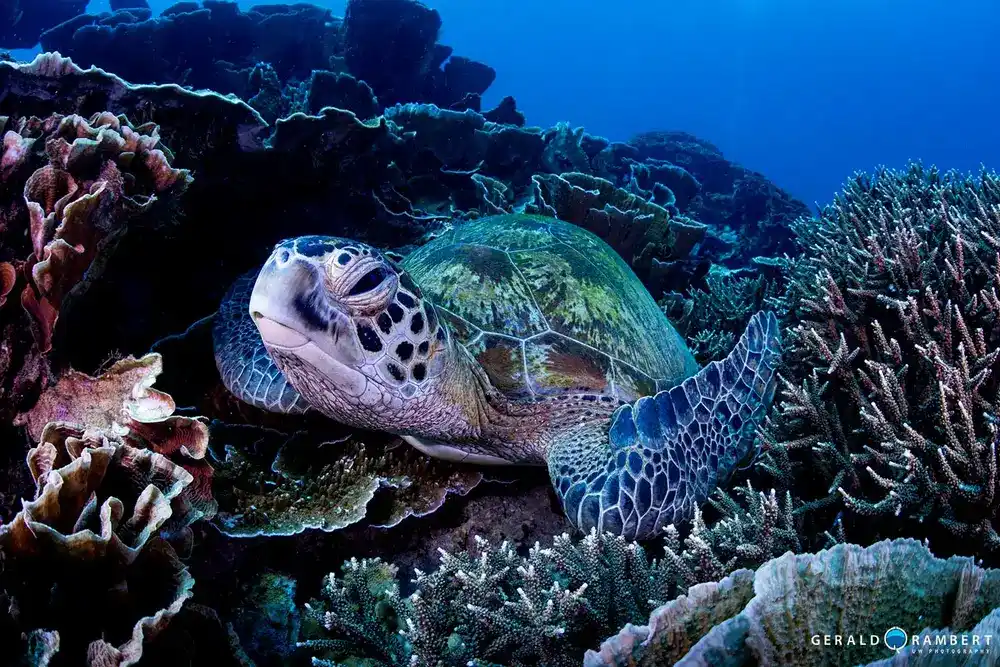
A small rock rising from the channel, covered in hard and soft coral and surrounded by clouds of reef fish. Turtles and reef sharks are regular visitors.
Crystal Rock
Famous for its clear water, colourful soft corals and schooling fish around the rock.
Manta Point (Karang Makassar)
A drift over a rubble bottom with manta ray cleaning stations.
Police Corner
A current-swept corner with walls and reef-top ledges, where reef sharks and larger pelagics are often seen.
The site of the day
A site that is perfect at slack tide can be unsuitable an hour later. Your guide picks the plan on the day, for good reasons.

Bring proper gear, or rent well-maintained equipment
Komodo's currents and occasional surface chop call for equipment you can trust. If you do not travel with your own gear, rent it from your dive center.
- Regulator: serviced and comfortable, with a well-positioned octopus.
- BCD: correctly sized, with an inflator and dumps you can use quickly.
- Wetsuit: 3 mm is enough for most divers; some prefer 5 mm for the cooler water in the south.
- Fins and mask: fins with enough power for current diving, a mask that fits and does not leak.
- Dive computer: every diver should have their own. Diving on your guide's computer is not a safe practice.
- Surface marker buoy (SMB): essential in current, with a whistle or other signalling device.
At Dragon Dive Komodo, a dive computer is included on all our PADI courses. For fun dives, computers are available with our rental equipment: mention it when you book so we can prepare yours. Air and Nitrox are filled on site by four electric Bauer compressors with Securus filtration.
Choose a dive center with qualified, permanent guides
A knowledgeable guide makes your diving safer and shows you the best of each site. When comparing dive centers, ask about:
- Local experience: guides who dive Komodo every week and read the currents, rather than seasonal staff new to the park.
- Qualifications: at Dragon Dive Komodo, our guides are Rescue and EFR certified.
- Safety on board: emergency oxygen, first aid kit, radio and a clear emergency plan with DAN contacts.
- Guide ratio: how many divers each guide leads in the water (see tip 7).
- Reviews: recent reviews on independent platforms, and what divers say about briefings and safety, not only about the fish.
For a complete checklist, read how to choose a dive center in Komodo and our Komodo diving safety playbook.
Be prepared for currents
Komodo's currents are what bring the fish, but they can be strong and change quickly. The routine that keeps you safe:
- Know your limits. Be honest about your experience in current. Skipping a dive is always an option.
- Listen to the briefing. Site, expected current, entry and exit: ask your questions before you jump in.
- Dive on your own computer. Manage your depth, time and ascent yourself.
- Stay close to your buddy and your guide. In current, distances grow fast.
- Deploy your SMB. It tells the boat where you are at the end of every drift.

To build confidence, the PADI Drift Diver specialty and the PADI Advanced Open Water course are the best preparation for Komodo's current sites.
Respect the marine life
Komodo is a national park and a UNESCO World Heritage Site. Help keep its reefs healthy for the divers who come after you.
- Do not touch or chase marine life, especially at manta cleaning stations, and do not shine lights directly into animals' eyes.
- Do not feed the fish: it changes their behaviour and harms the ecosystem.
- Protect the reef: watch your fins, gauges and camera, never hold on to live coral, and use a reef hook only where your guide says it is appropriate.
- Master your buoyancy: it is the best way to avoid accidental contact with the reef.
Dive in a small group
Safer
The guide keeps an eye on every diver, especially in current.
More personal
More attention, better briefings, and time to point out the small things.
Better for the reef
Fewer fins near the coral and less stress on the marine life.
More flexible
The dive plan adapts quickly if conditions change.
At Dragon Dive Komodo, each guide leads 4 divers, with 5 as an absolute maximum, and our day boats carry no more than 15 divers. Discover our dive boats.
Frequently asked questions
When is the best time to dive in Komodo?
Komodo can be dived all year. The dry season, from April to November, gives the most reliable conditions and visibility usually between 15 and 30 metres. For manta rays, the best period is November to June depending on the area: November to March in the south, November to June in the centre of the park.
Is Komodo diving suitable for beginners?
Yes, on the right sites. Komodo has sheltered reefs for Open Water divers and strong-current sites for experienced divers. Your guide chooses the sites each day according to the tide, the current and the level of the group.
Do I need my own dive computer in Komodo?
Every diver should dive with their own computer. At Dragon Dive Komodo, a dive computer is included on all our PADI courses; for fun dives, computers are available with our rental equipment: mention it when you book so we can prepare yours.
How many divers per guide at Dragon Dive Komodo?
Each guide leads 4 divers, with 5 as an absolute maximum, and our day boats carry no more than 15 divers.
Do I need the Advanced Open Water course to dive Komodo?
It is not mandatory, but it is the best preparation for Komodo's current and deeper sites. Open Water divers dive on sites adapted to their level.
Ready to dive Komodo?
Daily trips from Labuan Bajo into Komodo National Park, small groups and sites chosen for your level. Tell us your dates and experience, and we will suggest the right plan.
