
The 10 Best Dive Sites in Komodo, Ranked by Local Pros
Mantas, sharks, world-class drifts and untouched reefs — our hand-picked selection of the best dive sites in Komodo National Park, built from years of daily guiding, not a one-week visit.
The dive sites of Komodo National Park are consistently ranked among the best in the world. The park sits in the middle of the Indonesian Throughflow, between the Indian and Pacific Oceans — a natural funnel that drives huge volumes of nutrient-rich water through narrow straits. The result: explosive coral life, walls of fish, and regular encounters with manta rays, reef sharks, dogtooth tuna, giant trevally, pygmy seahorses and rare nudibranchs, all within one compact marine park.
At Dragon Dive Komodo we have been diving here year-round since 2016, and we are the only French-speaking dive centre permanently based in Labuan Bajo. This guide is built from daily guiding across every season — so treat online "Komodo guides" written after a single visit with caution.
North, Central, South — Three Zones, Three Moods
North Komodo
Warmer, clearer water and strong currents around big pinnacles — Castle Rock, Crystal Rock, The Cauldron. For experienced divers who love sharks, trevally and big-fish action. Generally at its best from March to November.
Central Komodo
The ideal mix for most levels: Batu Bolong, Karang Makassar (Manta Point), Siaba Besar, Tatawa Kecil. This is where most of our daily dive trips operate, year-round.
South Komodo
Cooler, plankton-rich water and a wild, end-of-the-world feel: Manta Alley, Yellow Wall, Cannibal Rock. Best explored aboard our Shenron liveaboard from December to early/mid-March.
The 10 Best Dive Sites in Komodo National Park
Our selection, based on years of daily guiding. We only take divers to each site when conditions and experience level are right — that judgement call, made every single morning, is half of what you pay a good dive centre for.
1Batu Bolong — the fish tornado (Central)
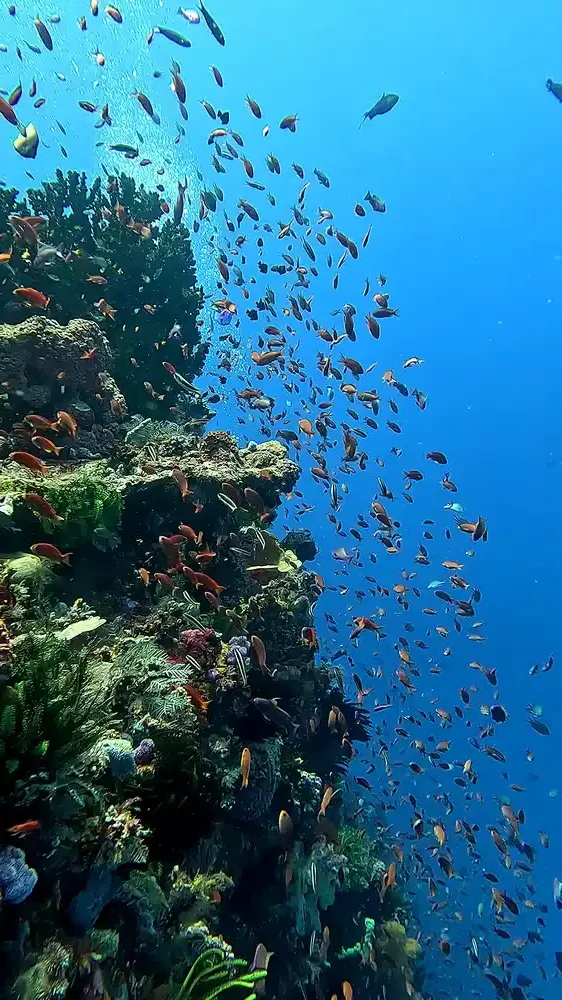
Probably the single most famous dive site in Komodo: a rocky pinnacle rising almost to the surface, fully exposed to powerful currents, its slopes carpeted in hard corals and huge sponges. The fish density is mind-blowing — white-tip reef sharks, humphead wrasse, dogtooth tuna, turtles, clouds of fusiliers — while macro lovers find pygmy seahorses and orangutan crabs on the same dive.
- Level: Advanced Open Water minimum, with recent current experience
- Current: can be very strong — we dive it only in a safe, narrow tidal window
- Highlight: insane fish life through the whole water column, big and small
2Castle Rock — pelagic cathedral (North)
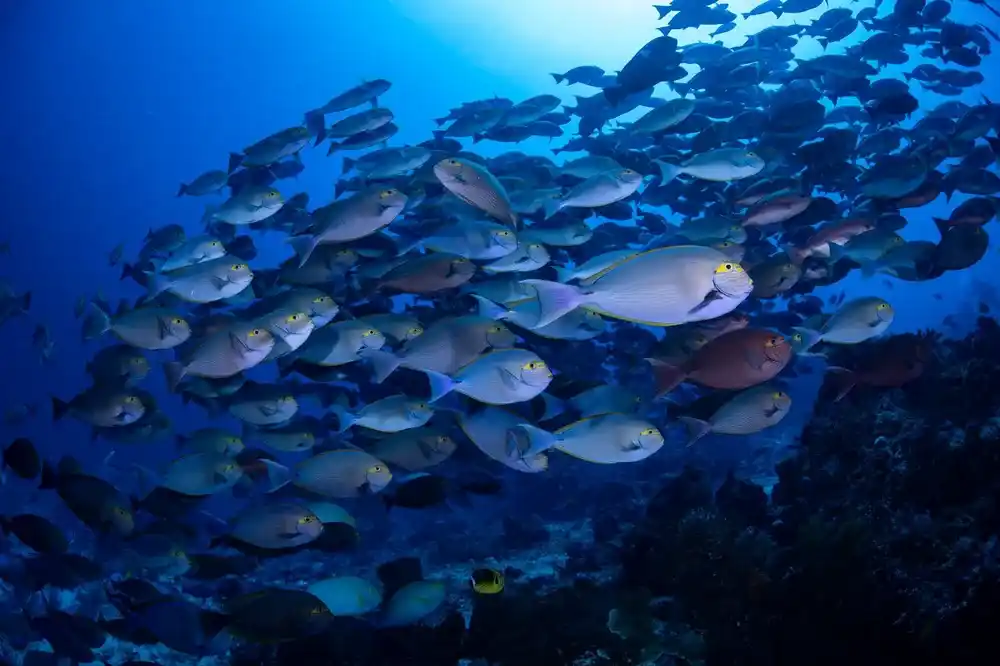
A huge underwater pinnacle topping out around 4 m and dropping past 40 m. This is Komodo's shark and pelagic hotspot: grey reef sharks, white and black tips, eagle rays, schools of tuna and barracuda, giant trevally — with dolphins occasionally passing through. The current often runs stronger in the upper layer than at depth, leaving sheltered pockets with surprisingly good macro.
- Level: experienced divers, comfortable in current
- Visibility: often excellent from April to October
- Highlight: shark action and big schools in blue water
3Crystal Rock — clear, powerful, spectacular (North)
Castle Rock's neighbour, and just as serious: a soft-coral-covered pinnacle whose top sometimes breaks the surface at low tide, in water that lives up to its name. Sharks, batfish, jumbo jacks, tuna schools, eagle rays and clouds of anthias — and when the current builds, sheltered edges reveal sea fans with pygmy seahorses, cuttlefish and nudibranchs, making it a rare North site that doubles as a macro dive.
- Level: experienced divers only — currents can be extreme
- Highlight: big fish and world-class macro on one pinnacle
4The Cauldron (Shotgun) — the roller-coaster (North)
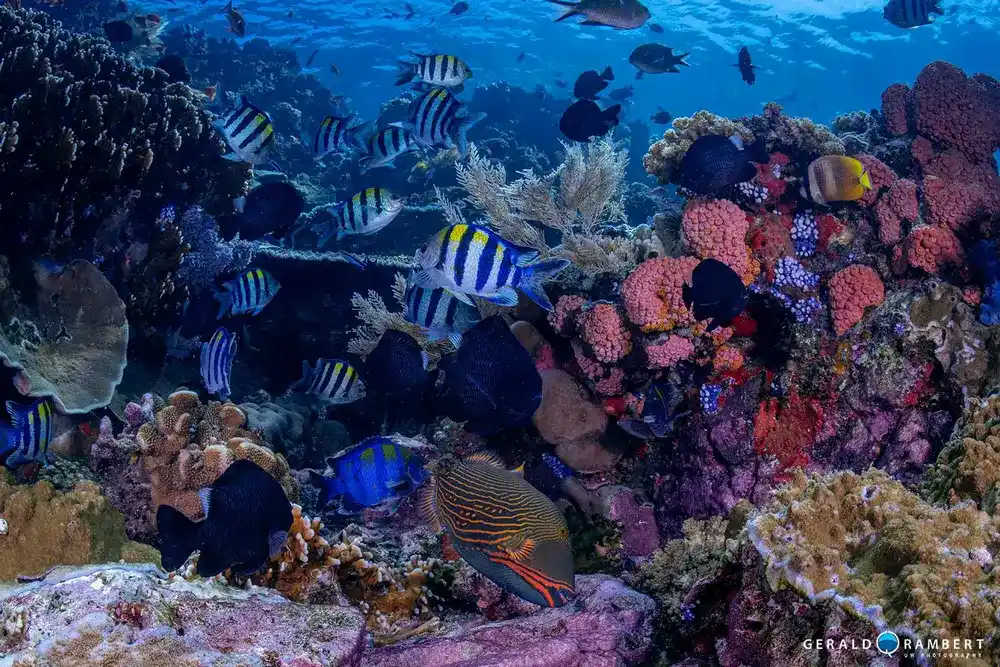
North Komodo's most iconic drift. You start over an intact coral garden, drop into a huge bowl where the current accelerates, then get slingshot out through the "shotgun" like a natural water slide. Along the way: clouds of baitfish hunted by reef sharks and giant trevally. The golden rule — don't fight the current, use it.
- Level: experienced divers, comfortable in strong current
- Highlight: pure adrenaline plus predator hunting action
5Karang Makassar (Manta Point) — the manta highway (Central)
A vast plateau around 2.5 km long — one of the largest single dive areas in the park — dotted with cleaning stations between 6 and 12 m. On a good day you can watch dozens of mantas cruising, feeding and being cleaned over the reef, alongside turtles, bamboo sharks, eagle rays, cuttlefish and even blue-ring octopus. The shallow profile makes it perfect for mixed groups of divers and snorkellers.
- Level: accessible from Open Water with solid buoyancy control
- Depth: main action between 6 and 18 m
- Highlight: the most reliable manta encounters in the park
6Tatawa Kecil — the underrated gem (Central)
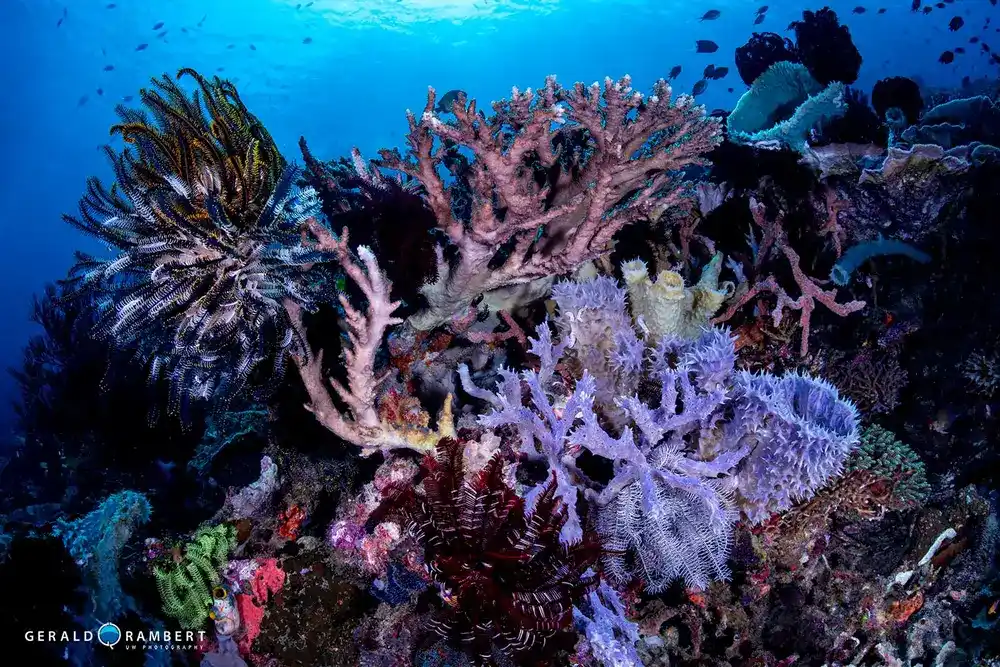
Still surprisingly quiet compared to the big names, Tatawa Kecil packs swim-throughs, dramatic rock formations and a lush reef into one high-energy dive. In the right window it delivers everything: eagle rays, giant trevally, sharks, sea snakes, mobulas and mantas, turtles, barracuda, napoleon wrasse — with an eastern wall that macro fans dream about.
- Level: very experienced divers only
- Current: strong to very strong — a specific tidal window is mandatory
- Highlight: big animals, unique topography and macro on one site
7Siaba Besar — Turtle City (Central)
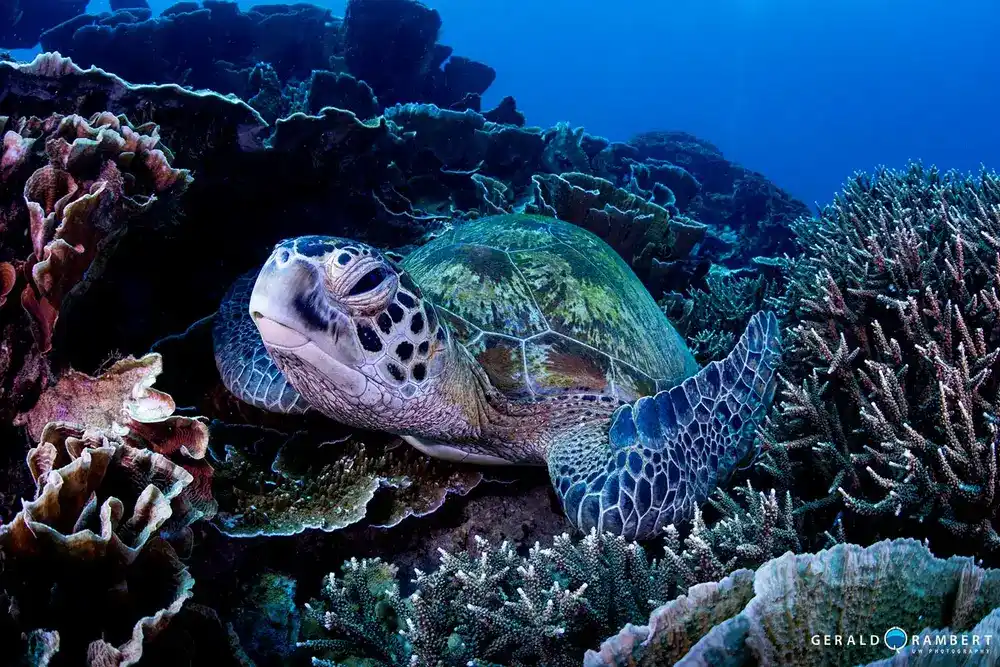
A sheltered bay nicknamed "Turtle City" for good reason — it's normal to lose count of the turtles on a single dive. Excellent visibility, a reef in superb condition, and rewarding macro too: cuttlefish, frogfish, ghost pipefish. The relaxed profile makes it ideal for newer divers, refresh dives and PADI courses.
- Level: all levels, from first dives up
- Highlight: turtles everywhere, in total comfort
8Pengah Kecil — the lively all-rounder (Central)
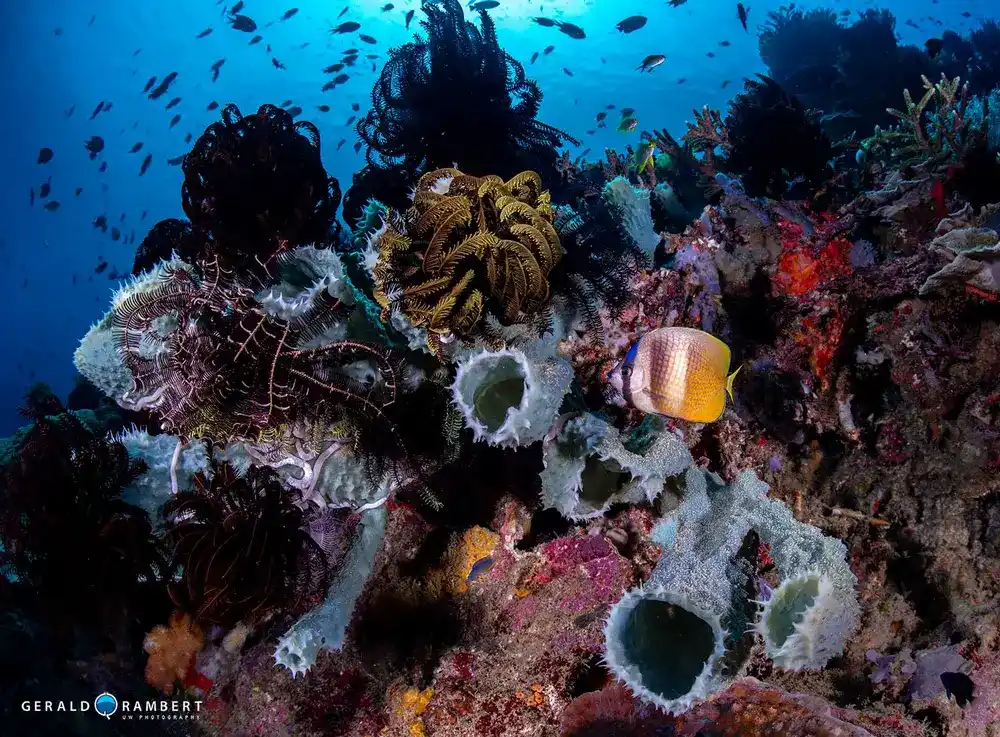
A rich, buzzing reef that hits the sweet spot of intermediate difficulty — enough movement to bring in the fish, without the ferocity of the northern pinnacles. A brilliant step-up site for divers building current experience. We've dedicated a full page to it: Pengah Kecil dive site guide.
- Level: intermediate — a perfect progression dive
- Highlight: dense reef life in a manageable current
9Manta Alley — the South's manta cathedral
A cluster of rocky islets off South Komodo hiding several cleaning and feeding stations that attract mantas in serious numbers. The dive typically starts on a shallow reef and turns into a drift with the current. In season, when the water is cooler and plankton-rich, encounters with dozens of mantas on a single dive are a real possibility.
- Season: at its best from November to early/mid-March
- Access: via Shenron liveaboard, linking several South sites in one trip
- Highlight: manta encounters on a scale few places on Earth can match
10Yellow Wall — the South's prettiest wall
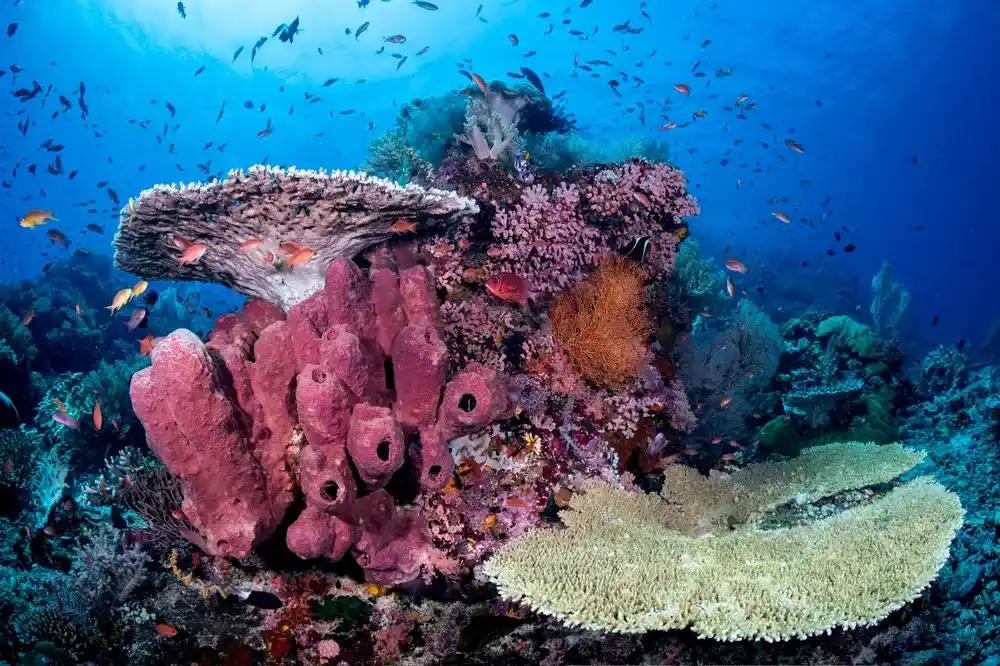
Often cited as one of the most beautiful walls in Indonesia, named for the thousands of tiny bright-yellow sea cucumbers covering the rock. The wall starts around 5 m and drops far beyond recreational limits, but the richest life sits in the 15–25 m band — making it work for guided beginners and experienced divers alike. Invertebrate life is exceptional, especially on night dives.
- Level: all levels, guided
- Highlight: colour saturation like nowhere else in the park
Sites That Just Missed the Cut
Komodo is full of less famous but fantastic dives we rotate through when conditions align: Police Corner at the tip of Siaba, with stunning overhangs, only diveable in the right tide and sea state; Batu Tiga, sometimes brutal current but insane predator action when it lines up; Tanjung Loh Sera in the deep South for that true end-of-the-world atmosphere; and Cannibal Rock, a macro legend. Explore them all on our interactive Komodo dive site map, or go deeper region by region with our North Komodo diving guide.
Dive These Sites With a Team That Lives Here
When you dive with Dragon Dive Komodo, you dive with a team based in Labuan Bajo year-round, guiding in French and English, that knows every site, tide and quirk of the park.
- Daily dive trips to Central and North Komodo from our resort with pool in Labuan Bajo
- Shenron liveaboard cruises combining North, Central and South at the right times of year
- Small groups: max 4 divers per guide, with detailed briefings in French or English
- PADI 5-Star IDC Dive Resort and active Green Fins member — safety and reef-friendly practices first
Komodo Dive Sites — FAQ
What level do I need for advanced sites like Batu Bolong, Castle Rock or the Cauldron?
We recommend at least Advanced Open Water with recent current and deep-dive experience. Some sites may be refused on the day if your level, fitness or recent experience does not match conditions — safety comes first.
Can you see manta rays in Komodo all year round?
Yes, mantas can be seen year-round in Komodo, but not always at the same sites. Karang Makassar (Manta Point) and Mawan in Central Komodo work well for much of the year, while Manta Alley in the South is usually at its best from November to March.
Are specific dive sites guaranteed in advance?
No. In Komodo, tides and currents change fast. The final site selection is made each morning by the captain and dive leader according to conditions and diver experience. Be cautious with operators who promise a specific site on a fixed date.
Should I choose daily dive trips or a liveaboard for Komodo?
Daily dive trips are perfect for exploring Central Komodo and parts of the North while enjoying the comfort of staying in town. A Shenron liveaboard cruise lets you combine North, Central and South in one trip, timing tides and site choices precisely. Many divers do both.
Which Komodo dive sites are best for beginners?
Siaba Besar, Karang Makassar (Manta Point) and Yellow Wall (guided) are all accessible from Open Water level with good buoyancy control. Our guides match every site to your level and keep groups to a maximum of 4 divers per guide.
Ready to Dive Komodo's Best Sites?
Message us and we'll build a realistic plan matched to your level and the season — daily diving, a Shenron liveaboard cruise, or a Dive & Stay combo at our resort. You can also request a custom quote.
Plan my Komodo dives on WhatsApp