
PADI Divemaster Training: Complete 2026 Guide - Requirements, Cost & Career Path
Becoming a PADI Divemaster is the first step into the professional diving world. This comprehensive guide covers everything you need to know: from prerequisites and training structure to costs, career opportunities, and how to choose the right Divemaster program. Whether you're considering a career change or want to work in paradise, this is your roadmap to becoming a certified dive professional.
What is PADI Divemaster Training?
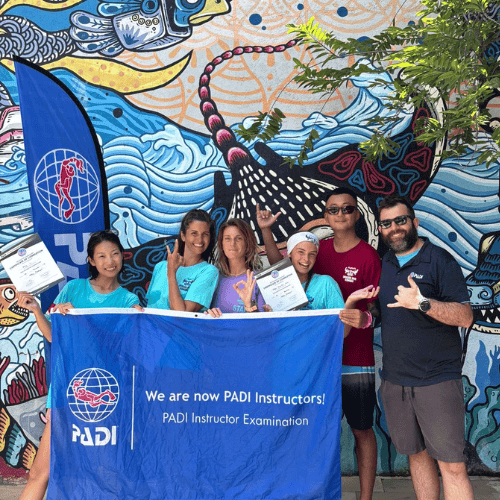
The PADI Divemaster (DM) certification is the first professional-level rating in the PADI system. Unlike recreational dive courses that focus on personal diving skills, Divemaster training transforms you from a recreational diver into a dive professional capable of assisting instructors, supervising dive activities, and guiding certified divers.
As a Divemaster, you become a role model for divers everywhere. You'll develop leadership abilities, refine your diving skills to demonstration quality, gain in-depth knowledge of dive theory, and learn how to manage dive operations safely and effectively. This certification opens doors to work in dive centers, on liveaboards, at resorts, and eventually progress to becoming a PADI Instructor.
What Can You Do as a PADI Divemaster?
Once certified, PADI Divemasters can perform the following professional activities:
- Supervise dive activities and assist with student divers: Work alongside PADI Instructors during courses, managing logistics, demonstrating skills, and providing individual attention to students.
- Conduct PADI Discover Scuba Diving programs: Introduce non-divers to scuba diving in confined water (pools) and, under specific conditions, in open water.
- Guide certified divers: Lead dive tours for certified divers, conduct site briefings, manage groups underwater, and ensure diver safety throughout the experience.
- Conduct PADI Scuba Review programs: Help certified divers refresh their knowledge and skills after periods of diving inactivity.
- Assist with PADI courses: Support instructors during Open Water, Advanced Open Water, Rescue Diver, and specialty courses by demonstrating skills, supervising activities, and providing feedback.
- Conduct specialty programs: With additional training, lead ReActivate programs, teach skin diving, and conduct various specialty programs under instructor supervision.
- Manage dive center operations: Handle equipment preparation, boat operations, customer service, dive site selection, and daily operational logistics.
💡 Key Insight: It's About Leadership, Not Just Diving Skills
Many divers assume Divemaster training is simply about becoming a better diver. While your personal skills will certainly improve, the real transformation is in developing leadership, problem-solving, and professional judgment. You're learning to manage situations, anticipate problems, and guide others safely—skills that extend far beyond diving itself.
PADI Divemaster Prerequisites & Requirements
Before enrolling in Divemaster training, you must meet specific prerequisites set by PADI to ensure you have the foundational skills and maturity necessary for professional-level training.
Mandatory Prerequisites
| Requirement | Details |
|---|---|
| Minimum Age | 18 years old |
| Certification Level | PADI Rescue Diver (or equivalent from another agency) |
| Logged Dives | 40 dives to start training 60 dives to certify as Divemaster |
| Emergency Training | EFR Primary & Secondary Care (or equivalent CPR/First Aid) within 24 months |
| Medical Clearance | Physician-signed medical statement (RSTC form) confirming fitness to dive |
Recommended Prerequisites (Not Mandatory But Highly Beneficial)
- Advanced Open Water & Specialty Certifications: Having certifications like Deep Diver, Navigation, Nitrox, and Night Diver provides valuable experience and knowledge that will make DMT easier.
- Diverse Dive Experience: Experience in different environments (cold water, currents, poor visibility, boat diving, shore diving) builds adaptability and confidence.
- Strong Swimming Skills: While not a formal prerequisite, comfort in the water and strong swimming ability make the stamina tests and rescue scenarios significantly easier.
- Equipment Familiarity: Understanding how to set up, troubleshoot, and maintain dive equipment will give you a head start in the practical training components.
🎯 Realistic Self-Assessment
Meeting the minimum requirements doesn't necessarily mean you're ready for DMT. If you're at exactly 40 dives with minimal variety in conditions, consider gaining more experience first. The divers who excel in Divemaster training typically have 60-100+ dives in varied conditions, solid buoyancy control, and genuine comfort underwater. Starting DMT with just 40 dives often means spending the first few weeks simply building competence rather than developing professional skills.
How PADI Divemaster Training is Structured
PADI Divemaster training is divided into three main components: Knowledge Development, Waterskills Development, and Practical Application. Each section builds upon the others to create well-rounded dive professionals. The entire program typically takes 4-8 weeks depending on the intensity and your availability.
1. Knowledge Development
The knowledge development portion focuses on dive theory, physics, physiology, equipment, and the dive industry. You'll study independently using the PADI Divemaster eLearning or Divemaster Crew Pack, then participate in knowledge review sessions with your instructor mentor.
Topics Covered:
- The Role & Characteristics of a Divemaster: Understanding professionalism, dive industry structure, and your responsibilities as a dive professional.
- Supervising Dive Activities: Risk management, emergency management plans, environmental awareness, dive briefings, and group management techniques.
- Dive Theory Deep Dive: Physics (pressure, buoyancy, gas laws), physiology (breathing, circulation, decompression), equipment function and troubleshooting, decompression theory, and dive planning.
- The Business of Diving: Marketing dive services, customer service excellence, legal considerations, environmental conservation, and career development.
- Diver Awareness: Recognizing diver stress, problem prevention, in-water assistance techniques, and accident management.
You'll complete knowledge reviews after each section, participate in presentations and workshops, and ultimately pass five exams covering dive physics, physiology, equipment, skills & environment, and the recreational dive planner (RDP).
📚 Study Tip: It's More Than Memorization
Many Divemaster candidates approach the knowledge development as a box-checking exercise. The most successful professionals treat it as foundational understanding. When you truly understand why things work—not just memorize formulas—you become a better problem-solver underwater and a more credible guide for your clients. Take your time with the theory; it pays dividends throughout your career.
2. Waterskills & Stamina Development
This component refines your personal diving skills to demonstration quality and tests your watermanship, stamina, and rescue abilities. You must demonstrate that you can perform all basic scuba skills flawlessly and handle physical challenges with ease.
Waterskills Circuit
The 24-skill circuit is the core assessment of your diving ability. You'll demonstrate all fundamental scuba skills—regulator recovery, mask clearing, buoyancy control, equipment removal and replacement, emergency ascents, and more—with precision and control. Your performance must be at "demonstration quality," meaning each skill is executed so cleanly that it could serve as an example for students.
Skills are performed in a confined water environment (pool or shallow, calm water), and you'll repeat the circuit multiple times during training, receiving detailed feedback and coaching from your instructor mentor to refine your technique.
Diver Rescue Assessment
You'll demonstrate your ability to handle diver emergencies by performing rescue scenarios in open water. This includes recognizing distressed divers, providing in-water assistance, performing tows, managing unconscious divers, administering rescue breaths, and executing boat exits with an unresponsive diver. These scenarios test not only your physical ability but also your decision-making under pressure.
Stamina Tests
Physical fitness and watermanship are assessed through several stamina exercises:
- 400m Swim: Completed without fins in under 11 minutes, using any stroke(s). This tests your swimming endurance and comfort in the water without equipment.
- 800m Snorkel Swim: Using mask, fins, and snorkel, completed in under 17 minutes without stopping. This builds surface swimming stamina critical for guiding and assisting divers.
- 100m Inert Diver Tow: Tow an unresponsive diver 100 meters in under 5 minutes. This simulates a real rescue scenario and tests your ability to manage an emergency with urgency.
- 15-Minute Tread/Survival Float: Stay afloat for 15 minutes without equipment, using only hands and legs, or float using minimal effort. This builds confidence in your ability to stay safe in the water during equipment problems or emergencies.
💪 Training Insight: The Pool is Your Best Friend
One of the most valuable aspects of training at a dive center with an on-site pool is the ability to practice skills circuits repeatedly. The difference between a diver who completes the 24-skill circuit once and a professional who has practiced it 10+ times is immediately apparent. Those extra reps build muscle memory, confidence, and the polish that separates adequate from exceptional. Use pool time generously—it's where demonstration-quality skills are truly forged.
3. Practical Application & Workshops
This is where theory and skills come together in real-world scenarios. The practical application phase teaches you how to actually do the job of a Divemaster—managing divers, conducting programs, handling equipment, and solving problems as they arise.
Divemaster-Conducted Programs
You'll learn to conduct and lead the following programs under the supervision of your instructor mentor:
- ReActivate Program (Scuba Review): Refresh certified divers on dive theory and practice rusty skills in a structured review session.
- Skin Diver/Snorkel Programs: Introduce non-divers to surface water activities, teach snorkeling skills, and conduct supervised snorkel excursions.
- Discover Scuba Diving (DSD): Introduce non-divers to scuba in a controlled environment (pool or confined water), and in some cases, conduct intro dives in open water under specific conditions.
Assisting with Training Dives
A significant portion of your practical training involves assisting PADI Instructors during courses. You'll shadow instructors during Open Water, Advanced, Rescue, and specialty courses, learning how to:
- Prepare equipment and manage logistics for dive days
- Brief students on dive site conditions, safety procedures, and skill requirements
- Demonstrate skills clearly and correctly for students to model
- Provide underwater guidance and individual attention to struggling students
- Monitor student performance and provide constructive feedback
- Manage dive site operations, including boat procedures, group coordination, and emergency readiness
- Handle real-world problems—equipment issues, weather changes, nervous students—with professionalism and calm
This real-world experience with actual paying clients is where you truly develop as a professional. Book knowledge and skill demonstrations are important, but learning to read divers, anticipate problems, and adapt on the fly comes only from hands-on experience.
Workshops: Building Specialized Skills
Throughout your training, you'll participate in workshops designed to develop specific professional competencies:
- Dive Briefing Workshop: Learn to deliver clear, engaging, and safety-focused dive briefings that set divers up for success. Practice public speaking, site descriptions, and handling questions with confidence.
- Buoyancy Control Workshop: Refine your buoyancy to perfection, learn to coach others on trim and control, and understand how to troubleshoot buoyancy issues in students and clients.
- Underwater Navigation Workshop: Master natural navigation techniques, compass navigation, and how to guide divers through complex dive sites without getting lost or disoriented.
- Search & Recovery Workshop: Practice systematic search patterns, underwater lift techniques, and recovery procedures for lost objects or equipment.
- Deep Diving Workshop: Understand narcosis management, gas planning for deeper dives, and safety protocols for dives beyond 18 meters.
- Night Diving Workshop: Develop confidence diving in darkness, learn night navigation techniques, and understand how to manage and guide nervous divers during night dives.
- Marine Life Identification Workshop: Learn to identify common fish, invertebrates, and marine ecosystems specific to your training location. This knowledge makes you a more engaging and valuable guide.
- Equipment Repair & Maintenance Workshop: Get hands-on experience assembling, disassembling, and troubleshooting scuba equipment. Learn basic regulator servicing, BCD repair, and common equipment fixes.
- Guiding Techniques Workshop: Practice leading groups underwater, managing diver separation, handling panicked or distressed divers, and making judgment calls about dive continuation or termination.
🎓 The Value of a Dedicated Instructor Mentor
The quality of your Divemaster training hinges largely on your instructor mentor. The best mentors don't just supervise you—they actively coach, provide detailed feedback, share real-world experiences, and invest in your professional development. Look for programs where instructors teach day-in, day-out and genuinely care about creating competent professionals, not just churning out certifications. A great mentor can make the difference between becoming a mediocre DM and a truly skilled professional.
Dive Site Mapping & Management Projects
During your training, you'll create a detailed dive site map of a local site, conduct environmental surveys, develop emergency action plans, and present your findings. This project teaches you how to assess dive sites professionally, understand site-specific hazards, and plan dive operations systematically. It's practical experience in the planning and management side of dive operations.
Final Assessments
Your Divemaster training concludes with comprehensive assessments to ensure you meet the professional standards:
- Knowledge Exams: Pass five subject-specific exams (Physics, Physiology, Equipment, Skills & Environment, RDP) with a score of 75% or higher.
- Waterskills Assessment: Demonstrate all 24 skills at demonstration quality in a single evaluated circuit.
- Rescue Assessment: Successfully complete all required rescue scenarios in open water.
- Practical Application Assessments: Demonstrate competence in conducting DSD, leading certified divers, delivering briefings, and assisting with training.
Once you successfully complete all components, your instructor mentor will certify you as a PADI Divemaster, and you'll be eligible to register as a dive professional with PADI.
⏱️ How Long Does DMT Actually Take?
Officially, PADI Divemaster training can be completed in as little as 4 weeks in intensive programs. However, most candidates find that 6-8 weeks provides a better balance—enough time to absorb knowledge, practice skills thoroughly, and gain meaningful experience assisting with real courses. The divers who rush through in 4 weeks often miss out on the depth of experience that makes truly competent professionals. Quality beats speed.
PADI Divemaster Training Costs in 2026
The cost of Divemaster training varies significantly depending on location, the quality of the program, and what's included. Understanding what you're paying for—and what hidden costs might emerge—is critical to making an informed decision.
Typical Cost Ranges by Region
| Location | Price Range (USD) | Notes |
|---|---|---|
| Southeast Asia (Thailand, Indonesia, Philippines) |
$800 - $1,500 | Most affordable region; high-quality training available at competitive prices |
| Latin America (Mexico, Honduras, Belize) |
$1,200 - $2,000 | Mid-range pricing; popular with North American candidates |
| Australia / Pacific (Australia, Fiji, PNG) |
$2,000 - $3,500 | Higher costs reflect developed-nation pricing and wages |
| Europe / USA (Mediterranean, Caribbean) |
$2,000 - $4,000 | Highest pricing due to cost of living and operational expenses |
What's Typically Included in DMT Programs
Understanding what's included versus what costs extra is essential. Most reputable programs include:
- Instruction & Mentorship: All knowledge development sessions, workshops, skill assessments, and practical application supervision
- Materials: PADI Divemaster eLearning or Crew Pack (books, slates, dive planning tools)
- Equipment Use: BCD, regulator, wetsuit, weights, tanks, and other necessary equipment during training dives
- Training Dives: All required confined water, open water, and practical application dives
- Pool Access: Unlimited or generous access to on-site training pools for practice (where available)
- Certification Processing: PADI application and processing fees (though sometimes listed separately)
Common Additional Costs
Budget for these potential extra expenses:
- PADI Registration Fee: ~$185 USD (first-year professional membership with PADI, required to work as a Divemaster)
- Medical Clearance: $50-$150 depending on your location and doctor
- EFR/CPR Course: $150-$250 if your certification is expired or you need to take it for the first time
- Rescue Diver Course: $300-$500 if you need to complete this prerequisite
- Personal Equipment: Mask, fins, snorkel, dive computer, surface marker buoy (SMB), cutting tool, torch—budget $300-$800+ depending on what you already own
- Accommodation & Living Expenses: Highly variable—$300-$1,500/month depending on location and lifestyle
- Travel Costs: Flights, visas, insurance, and transportation to your training destination
- Specialty Courses: Some programs offer discounts on Nitrox, Deep, or other specialties during DMT—expect 10-20% off normal pricing
💰 Total Real-World Budget
For a 6-week Divemaster program in Southeast Asia including accommodation, living expenses, equipment purchases, certification fees, and travel, expect to budget $2,500-$4,500 USD total. In more expensive destinations, this can easily double to $5,000-$8,000 USD. Plan conservatively—unexpected expenses always emerge.
Beware of "Unlimited Diving" Marketing Gimmicks
Many dive centers advertise "unlimited diving" during Divemaster training as a key selling point. While it sounds appealing, this is often a misleading and even counterproductive marketing tactic.
Here's the reality: Divemaster training is about professional development, not accumulating dive numbers. A candidate who logs 100 recreational fun dives during their training but receives minimal mentorship, limited real client interaction, and no structured professional skill development is not getting quality training—they're just diving a lot.
What actually matters is:
- Quality over Quantity: 40 dives assisting real instructors with paying clients, demonstrating skills, handling problems, and receiving detailed feedback is infinitely more valuable than 100 dives tagging along on fun dives.
- Professional Context: Are you diving as a professional-in-training, or are you just diving for fun with a Divemaster badge? There's a massive difference.
- Skill Refinement: Practicing your 24-skill circuit 10 times in the pool builds demonstration-quality skills. Doing 10 deep dives to 30 meters logging "experience" does not.
- Real Client Experience: Working with nervous Open Water students, guiding anxious first-time divers, managing groups with mixed abilities—these experiences create competent professionals. Fun dives with experienced buddies do not.
🎯 Quality Indicator: Watch How Programs Market Themselves
Programs that heavily emphasize "unlimited diving" and "dive as much as you want" are often compensating for weak professional training structures. The best DMT programs focus their marketing on mentorship quality, structured workshops, real client experience, and instructor credentials—not dive counts. Be skeptical of programs that use dive quantity as their primary selling point.
The Reality of Work Exchange Programs: An Honest Assessment
One of the most common questions aspiring Divemasters ask is: "Should I do a work exchange program?" These programs promise free or heavily discounted Divemaster training in exchange for working at the dive center—typically for 3-6 months or longer.
While work exchanges sound attractive on the surface, the reality is often problematic. Here's an honest industry-insider perspective on why these programs rarely deliver what they promise.
How Work Exchange Programs Typically Work
The standard structure is:
- Dive center covers the cost of Divemaster training (course fees, materials, certification)
- Candidate commits to working at the center for 3-6 months (sometimes longer)
- Candidate receives accommodation (often shared dormitory-style) and sometimes basic meals
- Candidate works full-time—filling tanks, cleaning equipment, helping with boats, assisting instructors—often 6 days per week
- Little to no monetary compensation beyond room, board, and training
Why Work Exchanges Are Problematic
1. Exploitation Disguised as Opportunity
Work exchange programs often operate in a gray area that resembles modern servitude more than professional development. You're providing valuable labor—work that the center would otherwise pay staff to perform—in exchange for training that costs the dive center relatively little to deliver (since you're also working to offset your own costs).
The math rarely favors the candidate. A 4-6 week Divemaster course might cost $800-$1,200 in Southeast Asia, yet you're committing to 3-6 months of full-time work. If the center were paying even a modest salary ($400-$600/month), your labor over that period is worth $1,200-$3,600—far exceeding the value of the training you receive.
2. Poor Quality Training & Mentorship
Dive centers offering work exchanges are often the ones struggling to fill positions with paid staff—which should raise immediate red flags about working conditions, management, and professional culture.
In many cases:
- Training becomes an afterthought: You're treated primarily as free labor, not a student. Your training is squeezed in around operational needs, often rushed or deprioritized when the center gets busy.
- Minimal mentorship: Instructors are too busy running courses to provide meaningful coaching and feedback. You're left to figure things out on your own.
- No real client experience: You're stuck doing grunt work—filling tanks, washing gear, cleaning boats—instead of assisting with actual courses and developing professional skills.
- High turnover environment: Centers relying on work exchange labor often have revolving-door staffing, poor morale, and a lack of experienced mentors.
3. Extended Time Commitment for Minimal Gain
Six months of your life is a significant investment. For that same six months, you could:
- Complete a paid DMT program in 6-8 weeks
- Get certified and immediately start applying for paid DM positions worldwide
- Gain diverse experience working at multiple dive centers rather than being locked into one location
- Maintain your freedom to leave if the situation is unsatisfactory
Work exchanges trap you in a long commitment, often in isolated locations, with little flexibility or opportunity to pivot if the training quality or working conditions are subpar.
4. Legal & Visa Issues
Many work exchange programs operate in legal gray areas regarding work permits and visas. You're technically working (providing labor in exchange for accommodation and training), but often doing so on a tourist visa without proper work authorization. This exposes you to potential legal problems, fines, deportation, or future visa complications—risks entirely borne by you, not the dive center.
5. Limited Professional Development
The candidates who excel in Divemaster training and go on to successful diving careers are typically those who:
- Receive structured, focused training with experienced mentors
- Gain meaningful experience assisting with real courses and clients
- Develop professional habits, standards, and work ethic from day one
- Work in environments with high standards and professional accountability
Work exchange environments rarely provide these conditions. You're more likely to develop bad habits, learn shortcuts, and adopt a "just get through it" mentality—none of which serves your long-term career.
When Work Exchanges Might Be Acceptable
There are rare situations where a work exchange could be reasonable:
- Very short commitment (2-3 months maximum): Anything beyond that is disproportionate to the training value.
- Clearly defined work hours and training schedule: You should know exactly when you're training versus working, with training prioritized.
- Experienced instructor mentors who are actively invested in your development: Not overworked staff treating you as free labor.
- Real professional experience: You're assisting with courses, interacting with clients, and developing skills—not just cleaning tanks.
- Written agreement: Clear terms, exit clauses, and mutual expectations documented to protect both parties.
Even with these conditions, you should carefully evaluate whether the trade-off is worth it compared to simply paying for a quality program and getting certified faster.
💡 Our Recommendation: Invest in Quality, Not "Free" Shortcuts
The best investment you can make in your diving career is quality training with experienced professionals who care about your development. Pay for a reputable program, complete it efficiently, get certified, and start your career properly. The few hundred or thousand dollars you "save" through a work exchange will cost you far more in time, opportunity, poor training, and potentially your passion for diving. Your career is worth more than a discount.
How to Choose the Right Divemaster Program
Selecting where and with whom you complete your Divemaster training is one of the most important decisions in your diving career. Not all programs are created equal. Here's what to look for—and what to avoid.
Key Factors to Evaluate
1. Instructor Quality & Experience
Your instructor mentor makes or breaks your training experience. Look for:
- Active teaching instructors: Instructors who teach day-in, day-out, not just occasionally. They understand current standards, real-world challenges, and how to mentor effectively.
- Experience level: PADI Course Directors, Master Instructor ratings, or instructors with 5+ years of active teaching experience bring deeper knowledge and perspective.
- Genuine investment in your development: Ask current or former students about instructor engagement. Do they provide detailed feedback? Do they care about your success beyond just certifying you?
2. Training Facilities & Resources
- On-site training pool: Invaluable for practicing skills circuits, refining demonstrations, and building confidence. Centers without pools must use ocean training sites, which limits practice opportunities.
- Well-maintained equipment: Quality gear that's properly serviced and sized correctly makes training safer and more effective.
- Classroom or dedicated learning space: Proper facilities for knowledge development sessions, presentations, and workshops.
- Diverse dive sites: Access to varied conditions (currents, depths, visibility, marine life) builds adaptable professionals.
3. Structured Training Program
Avoid programs that are vague about structure or overly flexible. Quality programs have:
- Clear curriculum and schedule: You should know what you're doing each week and what milestones you're working toward.
- Dedicated workshops: Structured sessions on buoyancy, navigation, briefings, guiding, equipment, and other professional skills.
- Meaningful client interaction: Regular opportunities to assist with real Open Water, Advanced, and Rescue courses—not just tagging along on fun dives.
- Assessment milestones: Regular evaluations and feedback throughout training, not just a final exam at the end.
4. Professional Culture & Standards
The environment you train in shapes the professional you become. Observe:
- Safety culture: Is safety prioritized, or are corners cut to save time or money?
- Professionalism: How do staff interact with clients? Is the atmosphere organized and respectful, or chaotic and casual?
- Standards adherence: Does the center follow PADI standards rigorously, or do you see instructors bending rules?
- Staff retention: High turnover is a red flag. Ask how long current instructors have been there.
5. Support & Included Services
Beyond training itself, what support does the program offer?
- Equipment provided or discounted: Do you have access to quality equipment during training, or do you need to bring/rent everything?
- Accommodation assistance: Does the center help you find housing, or are you on your own?
- Post-certification job support: Do they assist with job placements, provide references, or maintain an alumni network?
- Specialty course discounts: Can you complete Nitrox, Deep, or other specialties during DMT at discounted rates?
Red Flags to Avoid
- "Unlimited diving" as the primary selling point: Professional development should be emphasized, not dive counts.
- Work exchange programs longer than 3 months: Likely exploitative with poor training quality.
- Vague or absent curriculum details: If they can't clearly explain the training structure, it probably doesn't exist.
- Pressure to commit immediately: Legitimate programs don't need hard-sell tactics.
- Extremely low prices with no clear explanation: If it seems too cheap, ask what's being cut—it's probably quality.
- Negative reviews or consistent complaints about training quality: Do your research on forums, Facebook groups, and review sites.
- No clear instructor mentor assigned: You should know who's training you before you commit.
🔍 Do Your Research
Before committing to any program, reach out to past students. Ask them honestly about their experience—was training structured? Did they feel prepared after certification? Did they receive meaningful mentorship? Would they recommend the program? Past students have no reason to lie, and their insights are far more valuable than marketing materials.
Questions to Ask Before Enrolling
- Who will be my instructor mentor, and what's their background/experience?
- What's the typical training schedule and duration?
- How many other Divemaster candidates will be training simultaneously?
- How often will I assist with real courses (Open Water, Advanced, Rescue)?
- What workshops and skill development sessions are included?
- Is there an on-site pool for practice?
- What equipment is provided versus what I need to bring or rent?
- What's included in the course price, and what costs extra?
- Can I speak with recent graduates about their experience?
- Do you assist with job placement after certification?
- What's your policy if I need to pause or extend training?
🌏 Why Indonesia (and Komodo Specifically) is Exceptional for DMT
Indonesia offers some of the world's best value for Divemaster training—affordable pricing, stunning dive sites with incredible biodiversity, varied conditions (currents, depths, visibility), consistent diving year-round, and a well-established dive industry with experienced instructors. Komodo specifically provides world-class diving with manta rays, sharks, macro life, and diverse sites that build well-rounded professionals. Training in Komodo means you're learning in one of the planet's premier dive destinations—experience that looks impressive on your CV and prepares you for diving anywhere in the world.
Career Opportunities & Pathways After PADI Divemaster
Earning your Divemaster certification opens doors to a global industry with diverse career paths. While not everyone becomes a full-time dive professional, the certification provides options ranging from seasonal work to long-term careers.
Where Can You Work as a Divemaster?
- Resort Dive Centers: Work at dive resorts in tropical destinations, guiding guests, assisting with courses, and managing equipment.
- Liveaboard Operations: Join liveaboard crews, working with experienced divers in remote locations—often the most sought-after positions for lifestyle and diving quality.
- Day Trip Dive Boats: Lead day trips from coastal dive centers, guiding multiple dives per day for certified divers.
- Specialty Dive Operations: Work for technical diving centers, conservation projects, scientific diving programs, or adventure tourism companies.
- Freelance/Seasonal Work: Travel between destinations, picking up seasonal work during peak diving seasons (summer in Mediterranean, winter in tropics).
- Dive Travel Industry: Work for dive travel agencies, equipment manufacturers, or dive media (magazines, websites, social media).
Typical Divemaster Responsibilities
Day-to-day work as a Divemaster typically includes:
- Leading certified divers on guided dives (2-4 dives per day)
- Conducting dive briefings (site description, safety procedures, marine life, navigation)
- Assisting PADI Instructors during Open Water, Advanced, and Rescue courses
- Conducting Discover Scuba Diving programs for non-divers
- Managing dive equipment (preparation, maintenance, troubleshooting)
- Boat operations (loading equipment, managing divers, safety procedures)
- Customer service (answering questions, booking dives, upselling courses)
- Emergency response (managing incidents, first aid, evacuation procedures)
Realistic Salary Expectations
Divemaster salaries vary dramatically by location and employment type:
| Location / Type | Typical Monthly Salary (USD) |
|---|---|
| Southeast Asia (Thailand, Indonesia, Philippines) | $400 - $800/month + accommodation |
| Latin America (Mexico, Honduras) | $600 - $1,200/month |
| Liveaboards (global) | $800 - $1,500/month + room & board |
| Australia / Pacific Nations | $2,000 - $3,500/month |
| Freelance/Seasonal | Highly variable, often per-dive pay ($20-$50/dive) |
Important Reality Check: Divemaster work is rarely lucrative, especially in popular tropical destinations. Most Divemasters prioritize lifestyle, travel, and diving over income. If financial stability is your primary goal, this may not be the right career path—or you should view Divemaster as a stepping stone to becoming an instructor or transitioning into higher-paying dive industry roles (sales, management, technical diving).
⚠️ Critical Career Reality: Work Permit Restrictions in Southeast Asia
Important update for 2026: Thailand and Indonesia have recently implemented or are enforcing stricter regulations requiring Divemasters and dive professionals to be local nationals or hold specific work permits that are increasingly difficult to obtain. Many Southeast Asian countries are prioritizing local employment in the dive industry, making it significantly harder for foreigners to work legally as Divemasters.
This means that while you can complete your Divemaster training in these destinations, legally working there long-term as a foreign national is becoming increasingly restricted. Countries like the Philippines, Vietnam, and Myanmar are following similar trends. If your goal is to work as a Divemaster in Southeast Asia, research current work permit requirements carefully and have a backup plan. Consider destinations where foreign dive professionals are still welcome (Australia, Red Sea, Caribbean, Pacific islands) or plan to progress quickly to instructor level, which sometimes offers slightly better visa pathways—though restrictions apply there too.
Career Progression Pathways
Pathway 1: Become a PADI Instructor
The most common progression is completing the PADI Instructor Development Course (IDC) and becoming a PADI Open Water Scuba Instructor (OWSI). This significantly increases your employability, earning potential, and career options.
- Requirements: 100 logged dives, 6 months as a certified Divemaster (recommended for experience)
- Duration: 2-3 weeks intensive or longer part-time programs
- Cost: $2,000-$4,000 USD depending on location
- Career Impact: Instructors typically earn 30-50% more than Divemasters and have far more job opportunities globally
Pathway 2: Specialize in Technical or Specialty Diving
Pursue certifications in technical diving (trimix, rebreathers, cave, wreck penetration) or specialized fields (scientific diving, underwater photography/videography, marine conservation). Specialists often command higher pay and work in niche markets with less competition.
Pathway 3: Transition into Dive Industry Management or Business
Many experienced Divemasters transition into dive center management, sales, marketing, or eventually open their own operations. This path requires business acumen beyond diving skills but offers better income and long-term stability.
Pathway 4: Use Diving as a Supplemental Income Stream
Some professionals maintain careers outside diving while working as Divemasters seasonally or on weekends. This "best of both worlds" approach provides income stability while keeping diving in your life.
💼 Career Advice: Think Long-Term
Divemaster certification is a beginning, not an end. The most successful dive professionals continuously develop their skills, pursue additional certifications, build networks, and think strategically about their careers. Don't get stuck as a perpetual Divemaster—have a plan for progression, whether that's becoming an instructor, specializing, or transitioning into management. The industry rewards those who invest in their development.
Frequently Asked Questions
To enroll in PADI Divemaster training, you must be at least 18 years old, hold a PADI Rescue Diver certification (or equivalent from another agency), have logged at least 40 dives to begin training and 60 dives to certify, and hold a valid medical clearance and EFR/CPR certification within the last 24 months. While these are the minimums, having more diverse dive experience (80-100+ dives) typically makes training more effective.
PADI Divemaster training typically takes 4-8 weeks depending on the program structure and your availability. Intensive programs can be completed in 4-6 weeks if you're training full-time, while more relaxed or part-time programs may extend to 8-12 weeks. The quality of your training matters more than speed—rushing through in the minimum time often means missing valuable experience and depth of learning.
PADI Divemaster training costs vary significantly by location. In Southeast Asia (Thailand, Indonesia, Philippines), expect to pay $800-$1,500 USD for the course. In Latin America or popular dive destinations, costs range from $1,200-$2,500 USD. In developed countries (Australia, Europe, USA), training can cost $2,000-$4,000 USD or more. Additional expenses include PADI registration (~$185), medical clearance, equipment, accommodation, and living expenses. Budget $2,500-$4,500 total for Southeast Asia programs including all expenses, or $5,000-$8,000+ in more expensive destinations.
Generally, no. Work exchange programs are often exploitative arrangements that provide poor training quality, minimal mentorship, and require extended time commitments (3-6+ months) disproportionate to the value of training received. You're essentially providing free labor worth far more than the cost of the training. The best investment is paying for a quality program with experienced instructors, completing it efficiently, and starting your career properly rather than being locked into a long-term arrangement with questionable training standards and working conditions.
Yes, PADI is the world's largest dive training organization, and your Divemaster certification is recognized globally. However, you'll still need proper work permits and visas for each country where you want to work. Some countries make it easier to obtain work permits for dive professionals (Australia, certain Caribbean nations), while others have strict requirements. Research visa and work permit requirements for your target destinations before making plans.
Not necessarily, and it's often a misleading marketing tactic. Divemaster training is about professional development, not accumulating dive numbers. What matters is the quality and context of your dives—assisting with real courses, demonstrating skills, guiding clients, and receiving mentorship—not just logging recreational fun dives. A candidate with 50 high-quality professional training dives is far better prepared than one with 100 fun dives and minimal real client experience. Focus on programs that emphasize structured training, workshops, and meaningful client interaction rather than dive quantity.
Divemaster salaries vary dramatically by location. In Southeast Asia, expect $400-$800/month plus accommodation. In Latin America, $600-$1,200/month. Liveaboard positions typically pay $800-$1,500/month with room and board included. In developed countries like Australia, salaries range from $2,000-$3,500/month. Realistically, Divemaster work is rarely financially lucrative—most people prioritize lifestyle, travel, and diving over income. If financial stability is your primary goal, consider progressing to instructor level or pursuing management roles in the dive industry.
Divemasters can supervise dive activities, guide certified divers, and assist instructors with courses, but cannot independently teach full PADI courses. PADI Instructors can teach complete certification courses (Open Water, Advanced, Rescue, specialties) from start to finish, certify students, and have significantly broader teaching authority. Instructors typically earn 30-50% more than Divemasters and have far more employment opportunities. Most dive professionals view Divemaster as a stepping stone to becoming an instructor.
Komodo offers world-class diving with manta rays, sharks, incredible macro life, and diverse conditions (currents, depths, drift diving) that build well-rounded, adaptable professionals. Indonesia provides excellent value with affordable training costs, consistent year-round diving, and an established dive industry with experienced instructors. Training in one of the planet's premier dive destinations like Komodo provides impressive CV experience and prepares you to dive anywhere in the world. Plus, living costs are reasonable, the local culture is welcoming, and you're in paradise while training—not a bad combination.
Ready to Start Your PADI Divemaster Journey?
At Dragon Dive Komodo, we provide structured, professional Divemaster training with experienced instructor mentors, on-site pool facilities, comprehensive workshops, and meaningful client experience in one of the world's most spectacular diving destinations. We prioritize your development as a competent, confident professional—not shortcuts or gimmicks.
Questions? WhatsApp us or send an inquiry—we're happy to discuss your goals and whether Komodo is the right place for your Divemaster training.