
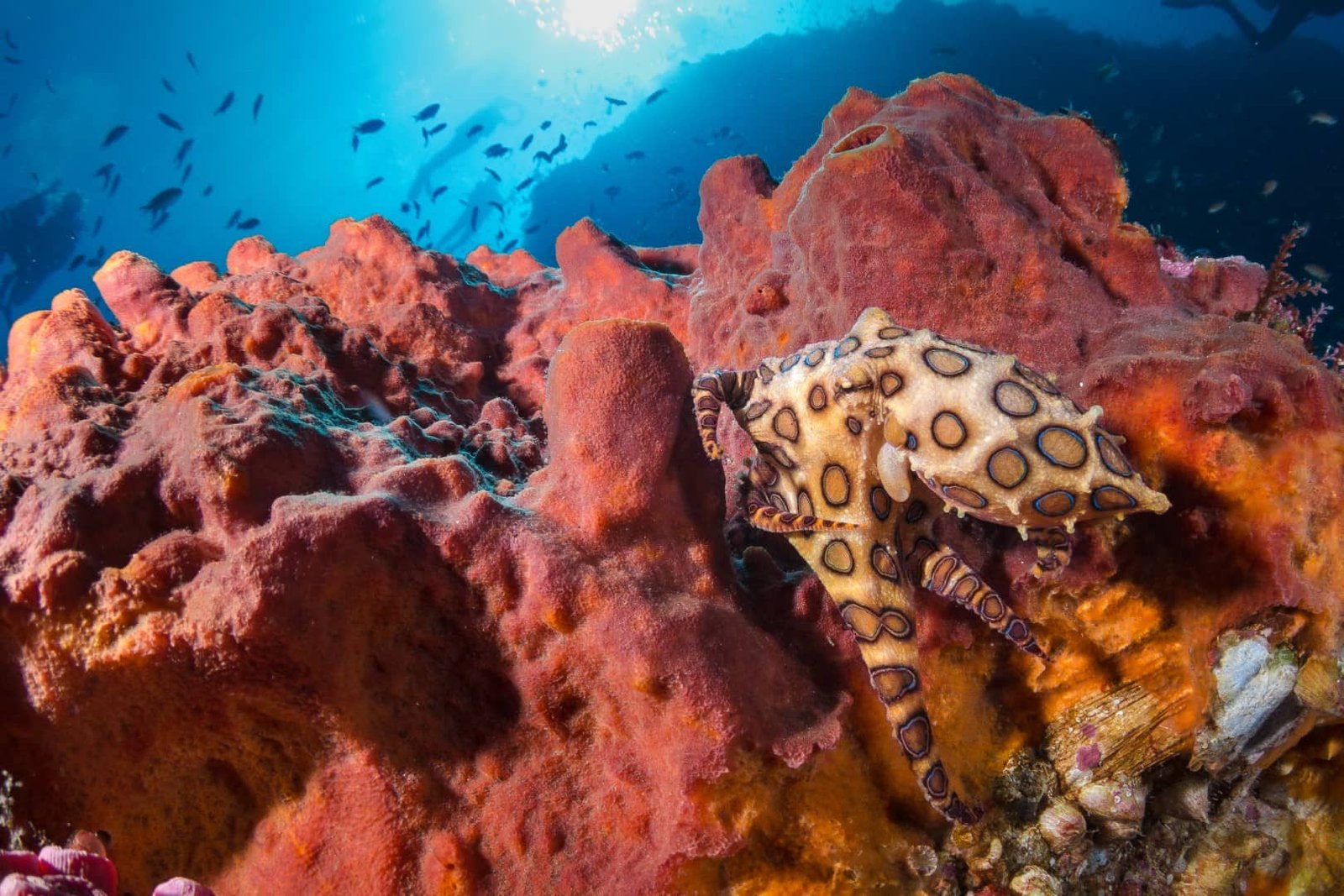
The Blue-Ringed Octopus
Beautiful, shy, and one of the most venomous animals in the ocean. Here is everything divers need to know about Komodo’s tiny electric-blue jewel.
TL;DR for Divers
Short on time? Here’s what matters most before you jump in.
✅ What it is
- Genus: Hapalochlaena (Blue-Ringed Octopus)
- Size: tiny (often palm-sized)
- Signature: blue rings/lines appear when threatened
📍 Where to look
- Habitat: rubble, rocks, dead coral, shells
- Komodo: macro/muck sites (Wainilu, Gindang)
- Best method: slow finning + perfect buoyancy
🚫 Safety snapshot
Bites are rare and almost always happen when people touch, grab, or harass the animal. Keep your hands off the bottom, don’t block escape routes, and never try to “trigger” the rings for a photo.
⭐ Pro-level etiquette
Treat it like a “no-touch, no-chase” subject. The best macro shots come from patience — not manipulation. You’ll get more natural behavior (and better photos) if you simply let it move.
Tiny but Mighty
Don't let the size fool you. The Blue-Ringed Octopus (Genus Hapalochlaena) is on almost every macro photographer's bucket list. Known for their electric-blue rings, these cephalopods are a marvel of nature found across the Indo-Pacific.
🔍 Identification
- Size: often 12 to 20 cm (including arms).
- Color: yellow/brown skin that can flash bright blue markings when threatened.
- Behavior: usually shy, often hiding in crevices or rubble.
☠️ Venom Stats
- Toxin: Tetrodotoxin (TTX).
- Type: powerful neurotoxin (can cause paralysis).
- Reality: extremely dangerous if a bite occurs — but bites are uncommon.
📍 Komodo Hotspots
We usually see them at macro sites like Wainilu and Gindang, and sometimes around rubble patches near Makassar Reef (Manta Point).
A Master of Disguise
The Blue-Ringed Octopus spends most of its time tucked into rubble, shells, or crevices. Like other octopus species, it uses chromatophores (color-changing cells) to blend with the environment and avoid predators.
Why do they flash blue?
The blue rings are a warning display (aposematism). They’re not always visible. When the octopus feels threatened, it can reveal the bright markings in a rapid “flash” to signal danger and discourage contact.
Diet & Hunting
Despite their size, they’re efficient hunters. They feed on small crabs, shrimp, and other crustaceans—using a bite to subdue prey quickly before eating.
Why divers love them
They’re the perfect “macro trophy”: rare enough to feel special, photogenic, and full of personality. The trick is to dive slowly and scan rubble like you’re looking for a moving pebble—because that’s exactly what it can look like.
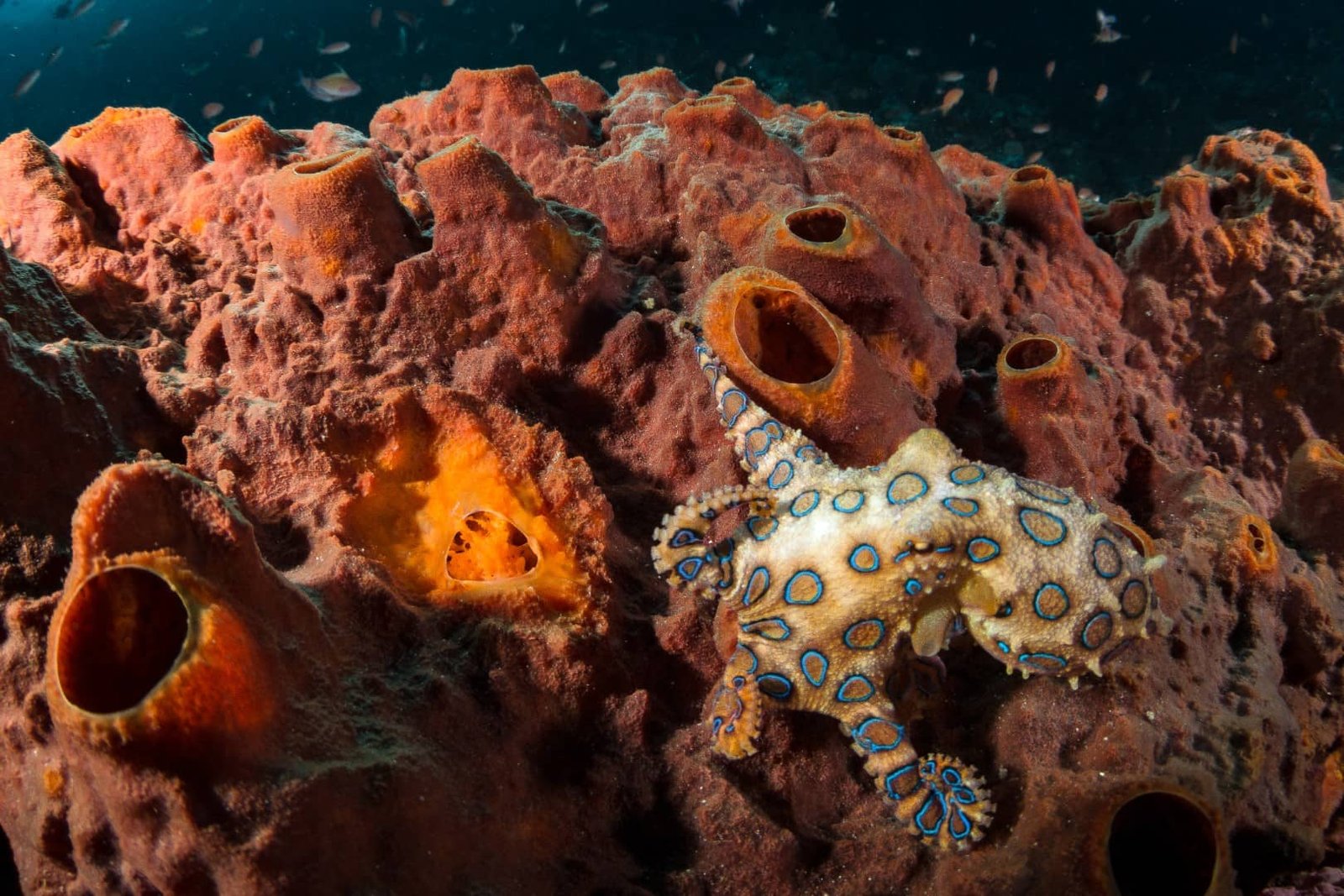
A Tragic Love Story
The life of a Blue-Ringed Octopus is short (often around 1–2 years). Reproduction is intense and brief:
- Males: may die soon after mating due to exhaustion.
- Females: lay a single clutch and guard the eggs, often refusing food.
- After hatching: the female typically dies shortly after.
Deadly Venom: What Divers Must Know
The Blue-Ringed Octopus is usually calm and avoids people. Most bites happen when the animal is handled. Never touch marine life.
The Science of the Sting
Blue-ringed octopus venom contains Tetrodotoxin (TTX), a potent neurotoxin. TTX can block nerve signals and may lead to progressive paralysis—including the muscles used for breathing.
🧠 Commonly reported symptoms
- Bite may be painless or feel like a tiny pinch.
- Numbness/tingling around lips, face, or limbs.
- Weakness and difficulty speaking/swallowing.
- Breathing problems if paralysis progresses.
This is not medical advice — if a bite is suspected, treat it as an emergency.
🚑 First Aid Protocol
If bitten, time is critical. There is NO antivenom.
- Apply a pressure immobilization bandage immediately (snake-bite style).
- Call emergency services / get urgent medical help.
- Support breathing (rescue breaths / CPR if needed) until help arrives.
*With rapid respiratory support and medical care, survivors often recover as the toxin is metabolized.*
✅ Safe viewing rules (what we brief on the boat)
- No touching. No gloves “just in case.” No “holding for a photo.”
- Hands close to your body and excellent buoyancy over rubble.
- Don’t block escape routes (let it retreat into a crevice).
- No poking to “make it flash” — this is harassment and increases risk.
The 4 Species (Commonly Recognized)
Several species are described within the genus. In Indonesia, divers commonly refer to sightings as the Greater Blue-Ringed Octopus (H. lunulata).
| Greater Blue-Ringed (H. lunulata) |
Indo-Pacific (incl. Indonesia). Often reported by divers in Komodo. |
| Southern Blue-Ringed (H. maculosa) |
Commonly associated with southern Australia. |
| Blue-Lined Octopus (H. fasciata) |
Often shows blue lines rather than rings. |
Marine life identification underwater can be tricky—your guide can help confirm what you’re seeing based on pattern, habitat, and behavior.
How to Spot Them in Komodo
Real, practical advice from our Divemasters — plus what to look for underwater.
💡 Pro Tip from Rudi (Dragon Dive DM)
"To find Blue Rings, you need to look in the dead coral (rubble). This is where they hunt. The best time to see them hunting is often later dives when the light gets softer and the site is calmer."
What to look for (underwater)
- Rubble fields with shells and broken coral.
- Small holes/crevices with a “sealed” look (octopus hiding).
- Movement that looks like a tiny stone crawling.
- Crab remains near a hiding spot (sometimes).
If you have good buoyancy and go slow, you’ll see more macro life in Komodo—blue rings included.
Komodo macro hotspots (typical habitat)
| Wainilu | Classic muck/macro: rubble + sand patches (slow, patient dives) |
| Mawan | Macro gem: broken coral + crevices (scan low and wide) |
| Makassar Reef | Rubble pockets away from manta action (look between features) |
Nature is wild—sightings are never guaranteed, but the habitat is consistent.
🗺️ Plan your macro day in Komodo
Want to increase your chances? Combine slow macro dives with the right sites and conditions. Browse our Komodo dive sites guide, then join our daily fun dives and tell the team you’re hunting for blue rings and other rare critters.
The Best Sites
Ask our crew to take you to:
- Wainilu: Komodo’s “muck diving” icon.
- Gindang: a hidden macro playground.
- Manta Point: rubble areas away from the cleaning station.
Photography Tips
- Lens: 60mm or 100mm macro.
- Light: use a gentle focus light first (don’t nuke it with strobe).
- Ethics: never poke it to “force” the rings—wait for natural movement.
The “flash” is a stress response. If it’s flashing, you’re too close or too intense.
Macro mindset: the best encounters happen when you’re neutrally buoyant, hands off the bottom, and moving at “muck pace”. If you want a dedicated critter day, our team can recommend the best match from our dive sites list.
Want a macro-focused day?
Tell us you want a macro day and we’ll aim for slower sites and longer bottom times (conditions permitting).
Frequently Asked Questions
Can a Blue-Ringed Octopus kill a human?
Yes, a bite can be life-threatening due to tetrodotoxin (TTX). However, bites are uncommon and typically happen when the animal is handled or trapped.
Is there an antivenom?
No. First aid focuses on pressure immobilization and breathing support until emergency medical care takes over.
Are they aggressive?
No. They are generally shy and prefer to hide. The bright markings are a warning signal—your cue to give space.
Do you see Blue-Ringed Octopus year-round in Komodo?
They can be encountered in Komodo across the year, but sightings vary because they are small, well-camouflaged, and not always out in the open.
Can they bite through gloves?
Don’t rely on gloves. The safe approach is simple: avoid contact entirely and keep excellent buoyancy over rubble and reef.
Ready for a real Komodo macro hunt?
Join our daily fun dives for the best local guidance — or step aboard Shenron to explore Komodo with more time on the best sites.