
The Komodo Dragon — The Complete Guide by a Resort on Their Island
The Komodo dragon (Varanus komodoensis) is the largest living lizard on Earth, found only on five Indonesian islands in and around Komodo National Park. After 12+ years operating our resort just 30km from their habitat — and dozens of guided treks on Rinca and Komodo Islands — here's everything we know about this prehistoric apex predator: anatomy, hunting, swimming, reproduction, conservation, and how to see them safely.

🦎 Komodo Dragon — Komodo National Park
The Komodo Dragon at a Glance ⚡
- Scientific name
- Varanus komodoensis
- Max size
- 3 meters / 10 feet
- Max weight
- 150 kg / 330 lbs
- Lifespan
- Up to 30 years
- Top running speed
- 20 km/h (12 mph) sprint
- Swimming distance
- Up to 500m in open sea
- Population
- ~3,000 – 5,700 wild
- IUCN Status
- Endangered (2021)
What is a Komodo Dragon?

The Komodo dragon is a species of monitor lizard (family Varanidae) endemic to Indonesia. It's the largest living lizard species on the planet, with adults reaching up to 3 meters in length and weighing up to 150 kg. They have a robust body, powerful jaws, sharp serrated teeth, and a long forked tongue used for chemoreception — they can detect carrion from up to 9 kilometers away.
Komodo dragons evolved in isolation on these Indonesian islands, where they fill the apex predator niche normally occupied by large mammals on continental landmasses. Their massive size — known as "island gigantism" — is an evolutionary adaptation to the absence of competition. Despite the fearsome "dragon" name, they're scientifically just very large lizards: no fire, no wings, no magic. Just 50+ kg of muscle and 60 serrated teeth.
Where Do Komodo Dragons Live? 🗺️
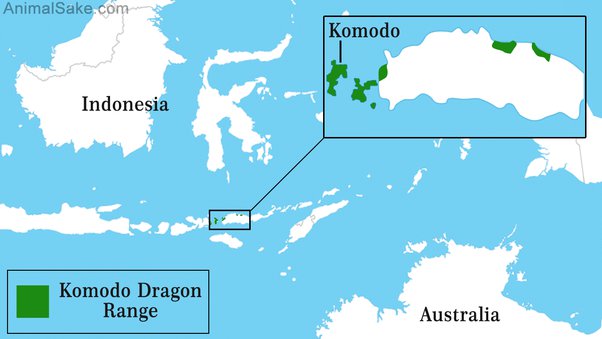
Komodo dragons live on only five islands in eastern Indonesia, all within or adjacent to Komodo National Park:
The total geographic range is tiny — under 1,000 km² of suitable habitat globally. This restricted distribution makes the species especially vulnerable to local disturbances, sea level rise, and disease outbreaks. There are no Komodo dragons anywhere else on Earth in the wild.
What Do Komodo Dragons Eat? (The Apex Predator) 🦷
Komodo dragons are apex carnivores. Their primary prey on Komodo and Rinca includes Timor deer, wild boar, water buffalo, and occasionally each other — yes, adult dragons are cannibalistic and will eat juveniles or competitors. They also scavenge extensively, often dominating any large carcass on the island.
Their hunting strategy is patient and brutal: ambush, bite, wait. The dragon strikes from cover with serrated teeth that tear flesh and rupture blood vessels, then delivers venom from glands in its lower jaw. The venom contains anticoagulant proteins that prevent blood clotting and lower blood pressure, causing the prey to bleed out and go into shock within hours or days. The dragon tracks the wounded animal — sometimes for kilometers — until it collapses, then feeds.
The "bacterial saliva" myth: for decades, scientists believed Komodo dragon bites caused death via septic bacteria in the saliva. Research published in 2009 by Bryan Fry (University of Queensland) confirmed that functional venom glands exist in the lower jaw — the bacterial theory is now considered largely disproven. The dragons are true venomous animals, not infected biters.
Can Komodo Dragons Swim? 🏊
Yes — and surprisingly well. Komodo dragons are strong swimmers, using their flattened tails like an oar and their powerful legs to propel themselves through water. They've been documented swimming up to 500 meters in open sea, crossing between Komodo and Rinca or to smaller islets in search of food or mates.
This swimming ability is part of how the species spread between islands historically, and explains why dragons sometimes appear on small islets without permanent populations. Tourists on Komodo NP day trips sometimes spot dragons swimming during boat rides — though it's not a daily occurrence.
Reproduction and How Long Do Komodo Dragons Live? 🥚
Komodo dragons reach sexual maturity at 5 to 7 years and breed annually. The mating season runs from May to August, during which males engage in dramatic ritualized combat — rearing up on their hind legs and wrestling for dominance and breeding rights. The winner mates with the female, often after extended courtship that can last several days.
Females lay clutches of 15 to 30 eggs in September or October, typically in burrows they dig themselves or in abandoned megapode bird nests. The eggs incubate for 8 to 9 months. Remarkably, female Komodo dragons can reproduce parthenogenetically — producing viable offspring without a male. This was first documented at London Zoo in 2006.
Hatchlings emerge in March or April measuring about 40cm and weighing 100g. Their first survival challenge is their own species: adult dragons readily cannibalize juveniles. To survive, young dragons spend their first 2 to 4 years living in trees, eating insects, smaller lizards, and bird eggs. Only when they reach 1 to 1.5 meters do they descend permanently to the ground.
Conservation: How Many Komodo Dragons Are Left? 🛡️️
In September 2021, the IUCN upgraded the Komodo dragon's status from "Vulnerable" to Endangered due to projected habitat loss from climate change and sea level rise. Population estimates vary between 3,000 and 5,700 wild individuals — the uncertainty itself reflects how difficult it is to count animals across the rugged terrain of five islands.
The three main threats
The good news: Komodo National Park has been protected since 1980 (recognized as a UNESCO World Heritage Site in 1991 and a UNESCO MAB Biosphere Reserve in 1986). Active patrolling, breeding programs at international zoos, and increasingly strict tourism rules have stabilized core populations. The species isn't on the brink — but it's not safe either.
Komodo vs Rinca — Where Should You See Them? 🥾
This is the question we get most from guests at our resort. The honest answer depends on what you want.
Our honest take from 12+ years here: do Rinca if you only have time for one. The dragon spotting is significantly more reliable, the trek is more pleasant (less hot, more shade), and you'll get better photos. Most popular 3D2N tours include both, which is the ideal solution if you can spare the time.
Best Time to Visit and See Dragons 📅
Dry season (April to November) is overwhelmingly the best time — predictable weather for boat trips and treks, less mud on trails, and good visibility for photos. Dragons are most active in the cooler morning hours (7am to 10am) and again in late afternoon. Midday is too hot for them, and you'll mostly see dragons resting in shade.
Mating season (May to August) offers chances to see male combat behavior — dragons rearing up and wrestling. Nesting season (September to October) means females are more aggressive around their burrows, so trekking is slightly more cautious. The hatching window (March to April) is unpredictable; juvenile dragons stay in trees, rarely seen by tourists.
Avoid: peak Bali holiday traffic (mid-July to mid-August, late December to early January) when boats are packed. Optimal months for both wildlife AND dive conditions: April-May or September-October.
Visiting Their Habitat — Safety Rules ⚠️
Komodo dragons attack humans rarely but the consequences when they do are severe. Following ranger instructions reduces risk to near zero — but the rules exist for a reason.
- Always with a licensed ranger. Mandatory by law, never trek alone.
- Keep at least 5 meters distance. Closer is for photos only with ranger approval.
- Never run. Dragons trigger on movement; running activates predator response.
- No selfies or back-turning toward dragons. Sounds obvious — still happens daily.
- Stay on marked trails. Dragons may rest hidden in vegetation off-path.
- Don't visit if you have an open wound — bleeding attracts attention from up to 9km.
- Menstruating? Disclose it discreetly to your ranger. Same biological reason as above. Rangers will adjust accordingly.
- No food on trails. Smell attracts dragons. Eat back at the ranger station.
Why Are They Called "Dragons"?
Komodo dragons were unknown to Western science until the early 20th century. The first European description was published in 1912 by Dutch zoologist Peter Ouwens, who studied specimens collected by Lieutenant Steyn van Hensbroek of the Dutch colonial administration. Local Indonesians had of course known about them for centuries, calling them "ora" or "buaya darat" (land crocodile).
The "dragon" name was coined in the early Western reports — partly because of their imposing size, partly because the timing coincided with the early 1900s public fascination with dinosaur discoveries and mythical reptilian creatures. The name stuck because it was sensational and helped popularize the species in the Western consciousness.
Despite the name: no fire-breathing, no wings, no scales of mystical origin. They're Varanidae, a real family of monitor lizards. The closest living relatives are the Asian water monitor and the perentie of Australia — both far smaller.
Frequently Asked Questions About Komodo Dragons
Are Komodo dragons dangerous to humans?
Yes, they are wild apex predators capable of attacking humans, and fatal attacks have occurred (extremely rarely). Always stay with a licensed national park ranger, never trek alone, keep at least 5 meters distance, and follow ranger instructions strictly. Tourists who respect these rules are very safe — millions visit each year without incident.
Can Komodo dragons swim?
Yes. Komodo dragons are strong swimmers, using their powerful legs and flattened tails to propel themselves. They've been documented swimming up to 500 meters between islands in search of food or mates.
How many Komodo dragons are left in the wild?
Approximately 3,000 to 5,700 individuals depending on the source. The species was upgraded to "Endangered" by the IUCN. The population is split across Komodo, Rinca, Flores, Gili Motang, and Padar islands.
What do Komodo dragons eat?
They're apex carnivores. Primary prey: Timor deer, wild boar, water buffalo, and occasionally smaller dragons (cannibalism). They're also scavengers and can detect carrion from up to 9 km away using their forked tongue. A single large meal can sustain an adult for weeks.
Do Komodo dragons have venom?
Yes. Research published in 2009 confirmed functional venom glands in their lower jaws. The venom prevents blood clotting and lowers blood pressure, causing rapid blood loss and shock in prey. The older "bacterial saliva" theory has been largely disproven.
How long do Komodo dragons live?
Up to 30 years in the wild, though most reach 20-25 years. They reach sexual maturity at 5 to 7 years and continue growing throughout their lives — the largest individuals are typically the oldest.
Should I visit Komodo Island or Rinca Island?
Rinca is generally better for actually spotting dragons (higher density per km², less crowded, shorter trek). Komodo has slightly larger dragons but more tourists. If you have time, most 3D2N tours include both, which is ideal. See our full Flores guide for the broader itinerary.
When is the best time to see Komodo dragons?
April to November (dry season) for reliable weather. Dragons are most active in cool morning hours (7-10am) and late afternoon. Mating season (May-August) can offer dramatic male combat sightings. Avoid mid-July to mid-August (peak Bali traffic) for crowd reasons.
About the Authors 👋
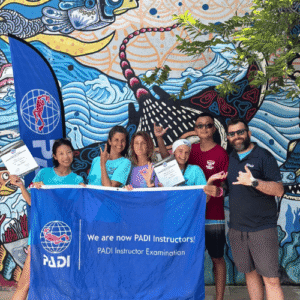
This guide was written by the team at Dragon Dive Komodo, a PADI 5★ IDC Dive Resort based in Labuan Bajo since 2014, just 30 kilometers from the dragons' habitat. We hold the PADI Platinum Professional Development Excellence Award. Resident PADI Course Director William Baillet and his team have organized hundreds of guided treks on Komodo and Rinca, and have observed dragon behavior firsthand more times than they can count. When we say "Rinca is better for spotting" or "the bacterial saliva myth is wrong" — it's from on-the-ground experience and current science, not Wikipedia copy-paste.
Want to See the Real Dragons?
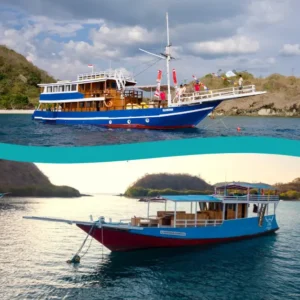
Komodo Island and Rinca Island are accessible only by boat from Labuan Bajo. We organize daily trips including ranger-guided dragon treks, often combined with diving, Padar viewpoint, and Pink Beach. WhatsApp us with your dates and we'll plan a memorable day in Komodo National Park.




3 Responses